What's Actually in Natural Henna? (Ingredients, Safety, and Why It Matters)
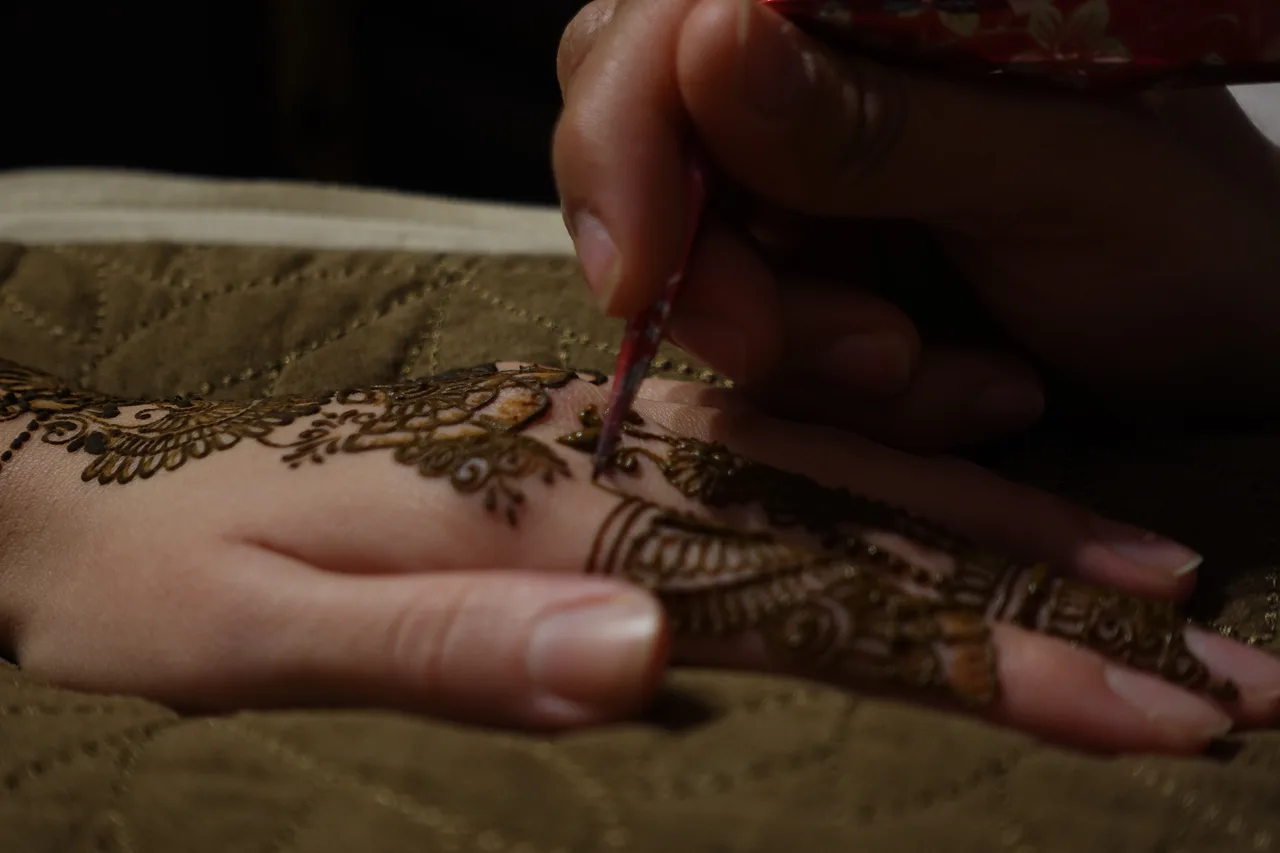
Natural henna paste contains just four ingredients: henna powder (dried, milled Lawsonia inermis leaves), essential oils (usually eucalyptus, tea tree, or cajeput), sugar, and water. That's it. Anything listing chemical names like PPD or "p-phenylenediamine," or sold as "black henna," is not natural henna and is not safe for skin. After 13+ years mixing my own paste for Calgary clients, I believe every person who wears henna deserves to know exactly what's in the paste touching their skin.
Transparency is part of doing this well. So let's open up the cone and look at what's really inside — and just as importantly, what should never be.
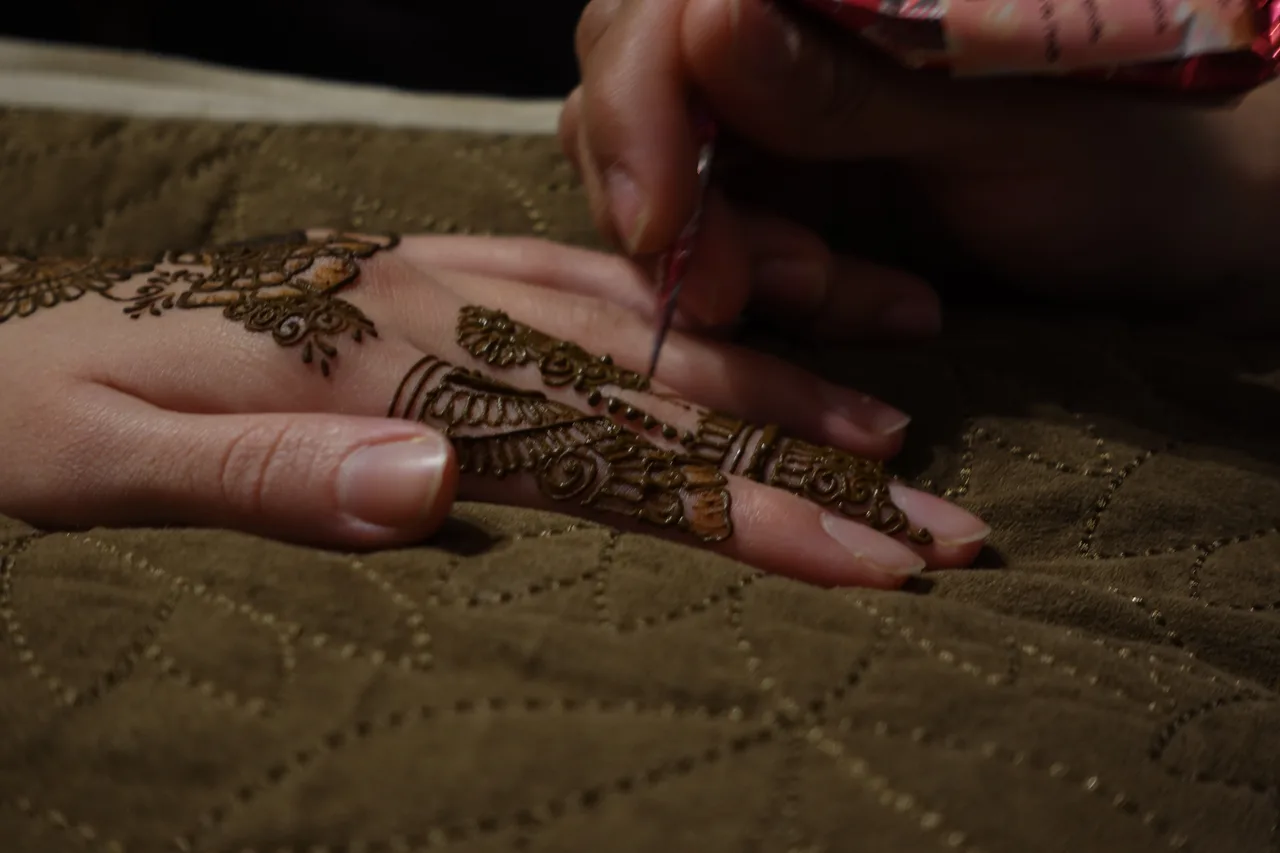
What are the four ingredients in real natural henna?
Genuine henna paste is remarkably simple, because nature does most of the work and the recipe just helps it along. Each of the four ingredients has one clear job.
- Henna powder — the active dye carrier, made of dried, finely milled henna leaves
- Essential oils — they release the dye and add aroma
- Sugar (or molasses) — gives the paste a smooth, workable, sticky consistency
- Water — binds everything into a pipeable paste
That's the whole list. If someone can't tell you their paste is essentially these four things, that's worth a pause.
[Photo needed: fresh-mixed natural henna paste in a bowl, showing its greenish-brown colour — current portfolio images are finished designs, not paste.]
Where does henna powder come from?
The powder is simply the henna plant, dried and ground, and its quality is where good colour begins. Lawsonia inermis — described by Encyclopaedia Britannica as the henna plant whose leaves yield the reddish-brown dye — is harvested, dried, and milled into the fine powder artists work with.
A few things shape powder quality:
- Region of origin — Rajasthan, Yemen, and Egypt produce powders with different stain depths
- Harvest and freshness — leaves are typically harvested a couple of times a year
- Milling fineness — finer powder makes smoother paste and crisper lines
I source mine carefully for my Calgary clients, because the powder sets the ceiling on how deep a stain can get — no amount of technique fixes weak powder.
[Photo needed: raw henna powder in a container, showing its green colour.]
What is the role of essential oils in henna paste?
Essential oils are the quiet workhorses of a good paste, because the right ones help release the dye so it transfers more readily to skin. They're a major factor in whether a stain comes out flat or deep.
What you should know:
- Certain oils contain terpenes that help free the lawsone for a darker stain
- Common choices include eucalyptus, tea tree, cajeput, and ravensara
- Some artists use proprietary "henna oil" blends built around these
- Cheap or harsh oils can irritate skin, so quality matters here too
[Photo needed: the essential oil bottles used in mixing, as a behind-the-scenes look at the supplies.]
Why does fresh paste matter so much?
Freshness is one of the biggest hidden factors in stain quality, because henna's dye potency fades once paste is mixed. A paste that sat too long simply has less colour to give.
The reality of paste freshness:
- Mixed henna paste begins losing dye strength within 2–3 days
- Pre-made store cones can be weeks or months old, with unpredictable results
- The chemistry is simple: available lawsone dissipates over time
- My practice is to mix fresh for every booking rather than in big batches
This is the same reason I explain to brides chasing the deepest colour in how to get the darkest bridal henna stain — fresh paste is the foundation everything else builds on.
What should never be in henna paste?
Just as important as the four good ingredients is the short list of things that should never appear, because their presence turns body art into a health hazard. This is the part I'm most passionate about.
Never accept paste containing:
- PPD (para-phenylenediamine) or any "p-phenylenediamine"
- Hair-dye chemicals of any kind
- "Black henna" colouring agents
- Synthetic dyes
The FDA is explicit that the additive used to blacken henna is often PPD, which can cause dangerous skin reactions — burns, scarring, and lifelong allergy. There is no safe version of this. (For more on the difference between real dark stains and dangerous ones, see henna vs Jagua.)
How can you tell if your henna is natural?
You can spot natural henna with your own senses, because real paste looks, smells, and behaves differently from a chemical product. Trust these cues.
- Colour: greenish-brown paste, not jet-black
- Smell: earthy and plant-like, not chemical or sharp
- Application colour: the stain starts orange, never instantly black
- Development: it sets to brown and red over a day or two — never deep black on day one
If the paste is black in the cone or the stain is black within minutes, walk away.
Is "organic" henna actually different?
"Organic" sounds reassuring, but it's often more marketing than meaning, because the label describes farming rather than the qualities that matter for your skin. Here's my honest take.
- "Organic" claims frequently aren't the deciding factor in safety or quality
- What truly matters is how the henna is sourced and how fresh the paste is
- Better questions to ask: "Is the paste freshly mixed?" and "What's in it?"
- Plenty of excellent, safe natural henna isn't certified organic at all
Is natural henna safe during pregnancy?
This comes up often, and the general answer is reassuring — with one firm caveat. Natural henna is widely considered safe in pregnancy, and many cultures include pregnancy henna in their traditions. The NHS even lists pure henna among safer dye alternatives.
That said:
- Avoid PPD "black henna" absolutely — doubly so during pregnancy
- Pregnancy can make skin more sensitive, so a patch test is wise
- If you have any concerns, check with your doctor first
This care for natural preparation isn't new — institutions like the Natural History Museum document henna's long traditional use across cultures and centuries, long before any synthetic shortcut existed.
Book with Henna by Arooj
Want bridal henna in Calgary made from 100% natural, fresh-mixed paste — with full transparency about exactly what's in it? Explore my bridal henna options, and once your design is on, make it last with my complete henna aftercare guide.
Frequently asked questions
Is henna safe to use on children?
Natural henna is generally considered safe for children's skin, but two cautions apply: never let anyone use 'black henna' on a child, as the PPD it contains can cause severe reactions, and always patch test first since young skin can be more sensitive. When in doubt, keep designs small and check with your pediatrician.
Can I be allergic to natural henna?
True allergies to pure, natural henna are rare. Most reactions people blame on 'henna' are actually reactions to PPD in 'black henna,' which is a chemical, not a plant. If you have very sensitive skin, a patch test 24–48 hours before a big application is a sensible precaution.
What's the difference between organic henna and regular henna?
Often less than the label suggests. 'Organic' refers to how the henna plant was farmed, but it doesn't guarantee a fresher or safer paste. The questions that actually matter are 'Is the paste freshly mixed?' and 'What's in it?' — a fresh, pure natural paste is safe and effective whether or not it carries an organic certification.
Why is 'black henna' dangerous?
Because it isn't really henna. 'Black henna' is paste adulterated with PPD, a coal-tar hair-dye chemical added to force a fast, jet-black stain. The FDA links it to dangerous skin reactions including chemical burns, scarring, and permanent sensitisation. Natural henna is never jet-black on day one — it starts orange.
Is henna paste vegan?
Pure natural henna paste — henna powder, essential oils, sugar, and water — is plant-based and vegan. The one thing to check is the essential oils and any additives an artist uses, but the core recipe contains no animal products. My paste is vegan-friendly.
Can I make my own henna paste at home?
You can, and many people do, but getting a deep, even, photo-ready stain takes practice with sourcing, proportions, resting time, and oils. For a wedding or major event, a fresh-mixed professional paste is worth it. For casual experimenting at home, start with quality natural henna powder and a trusted recipe — and never add anything synthetic to darken it.
Book your Calgary henna session
Bridal mehndi, party & event henna, and private appointments by Arooj — 100% natural henna, custom freehand designs.
View the service →Related articles
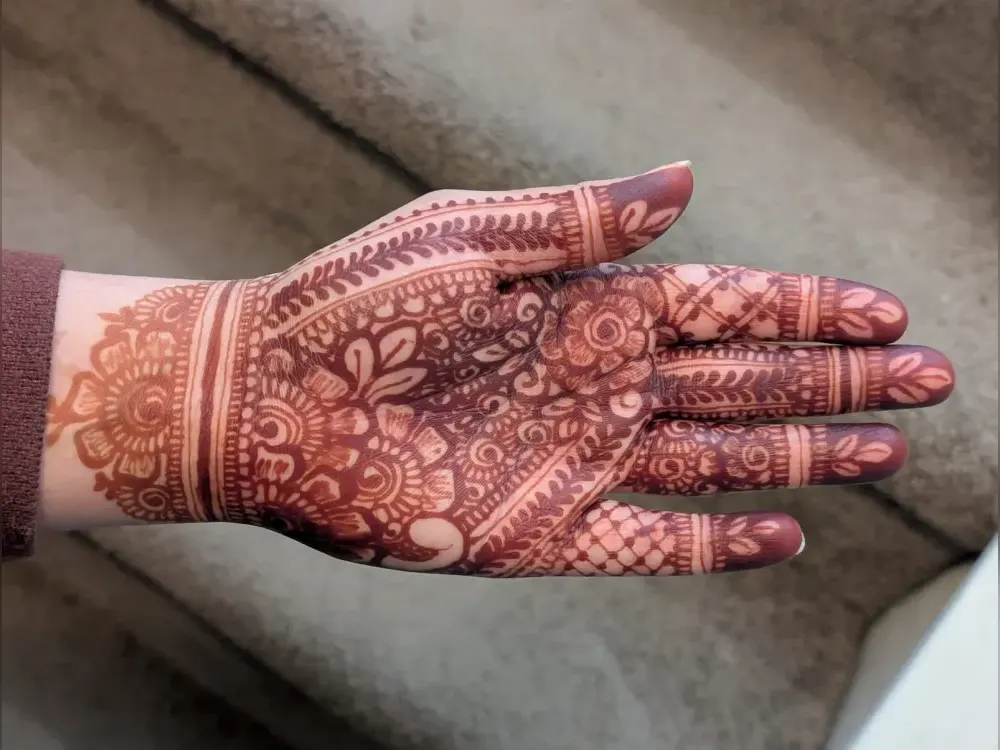
Henna vs Jagua: What's the Difference (and Which Should You Choose)?
Henna stains reddish-brown over 24–48 hours; Jagua stains blue-black within hours. A Calgary artist compares the two natural body arts — and warns why PPD 'black henna' is neither.
Read article →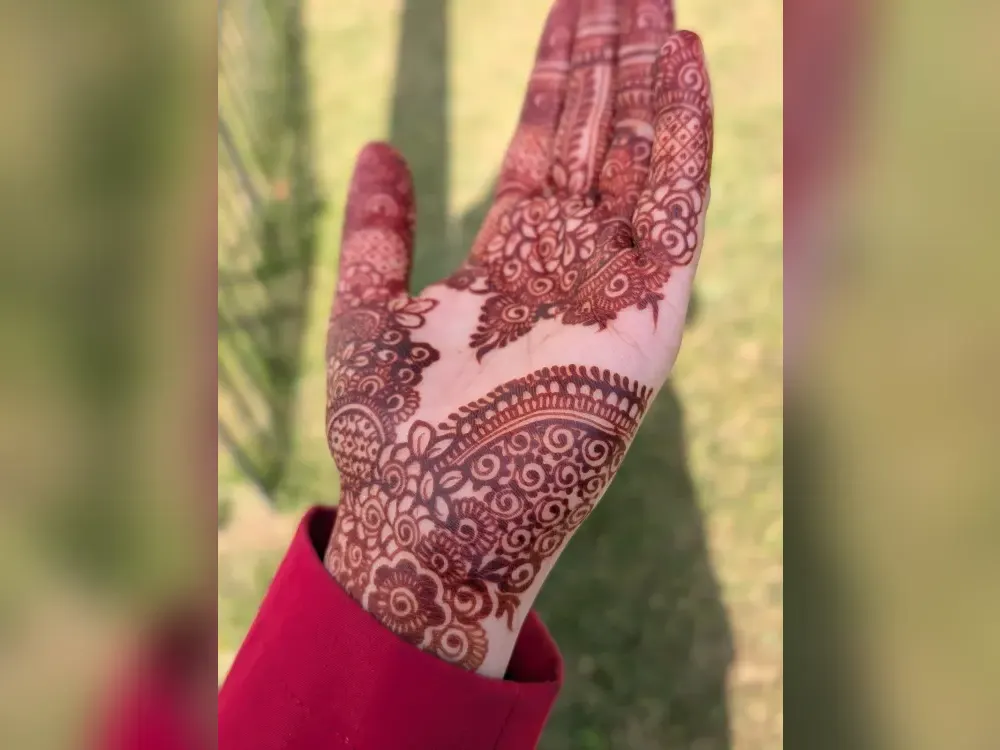
Why Some People Get Darker Henna Stains Than Others
Henna stain depth varies by skin chemistry, keratin density, body temperature, and aftercare — not the henna itself. A Calgary artist explains why your stain differs from your friend's.
Read article →
The Complete Henna Aftercare Guide: Make It Last 14+ Days
Great henna aftercare follows four phases — dwell time, removal, the first 24 hours, and the week after. A Calgary artist's complete guide to making your stain last 14+ days.
Read article →