Henna vs Jagua: What's the Difference (and Which Should You Choose)?
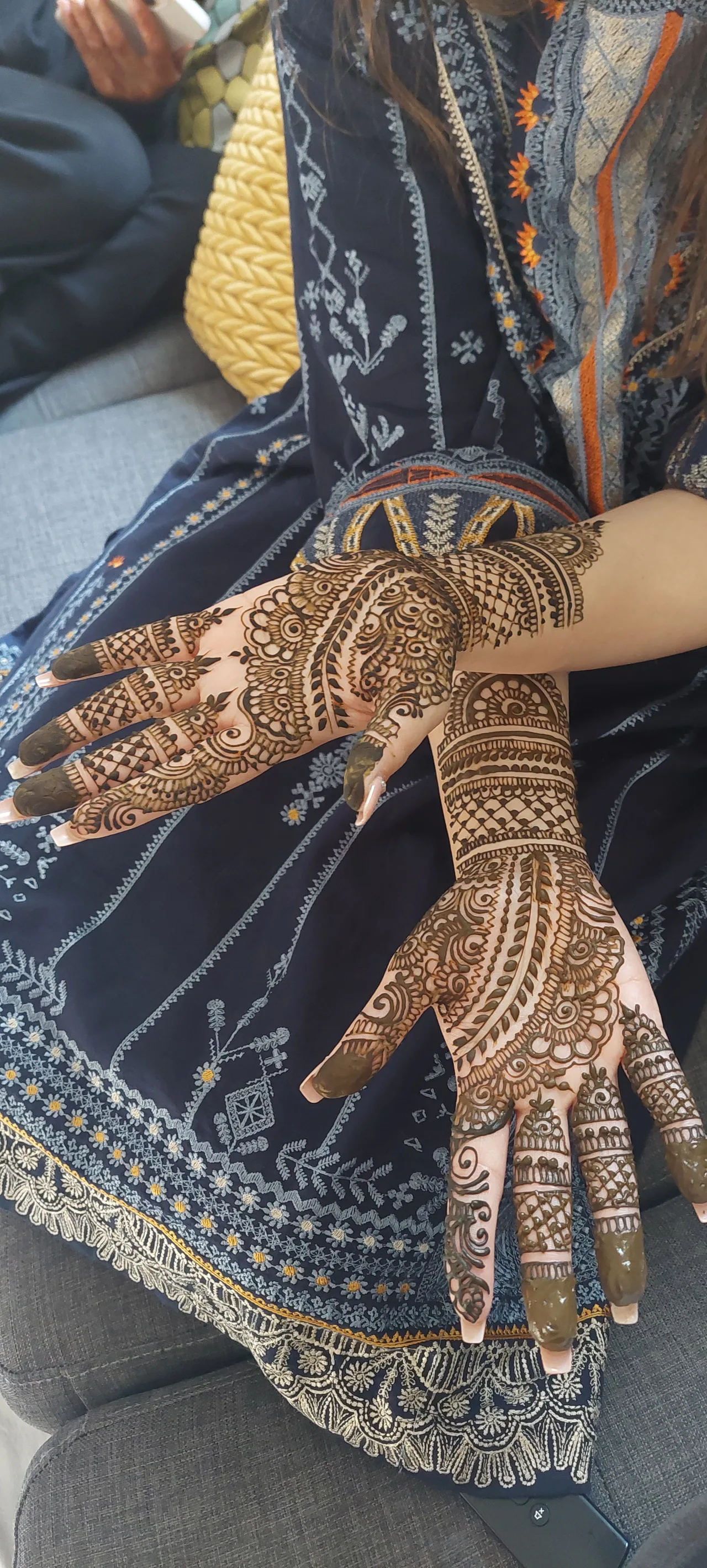
Henna and Jagua are both natural, plant-based body art, but they behave very differently: Jagua stains a deep blue-black within hours, while henna stains reddish-brown over 24–48 hours. Henna comes from a leaf (Lawsonia inermis); Jagua comes from a fruit (Genipa americana). Both are safe when natural — but PPD-laced "black henna" is neither, and after 13+ years in Calgary I'll always steer you firmly away from it.
If you've seen those striking blue-black "henna" designs online and wondered how they get that colour, the answer usually isn't henna at all — it's Jagua. Here's how the two compare, and how to choose between them for your next Calgary event.
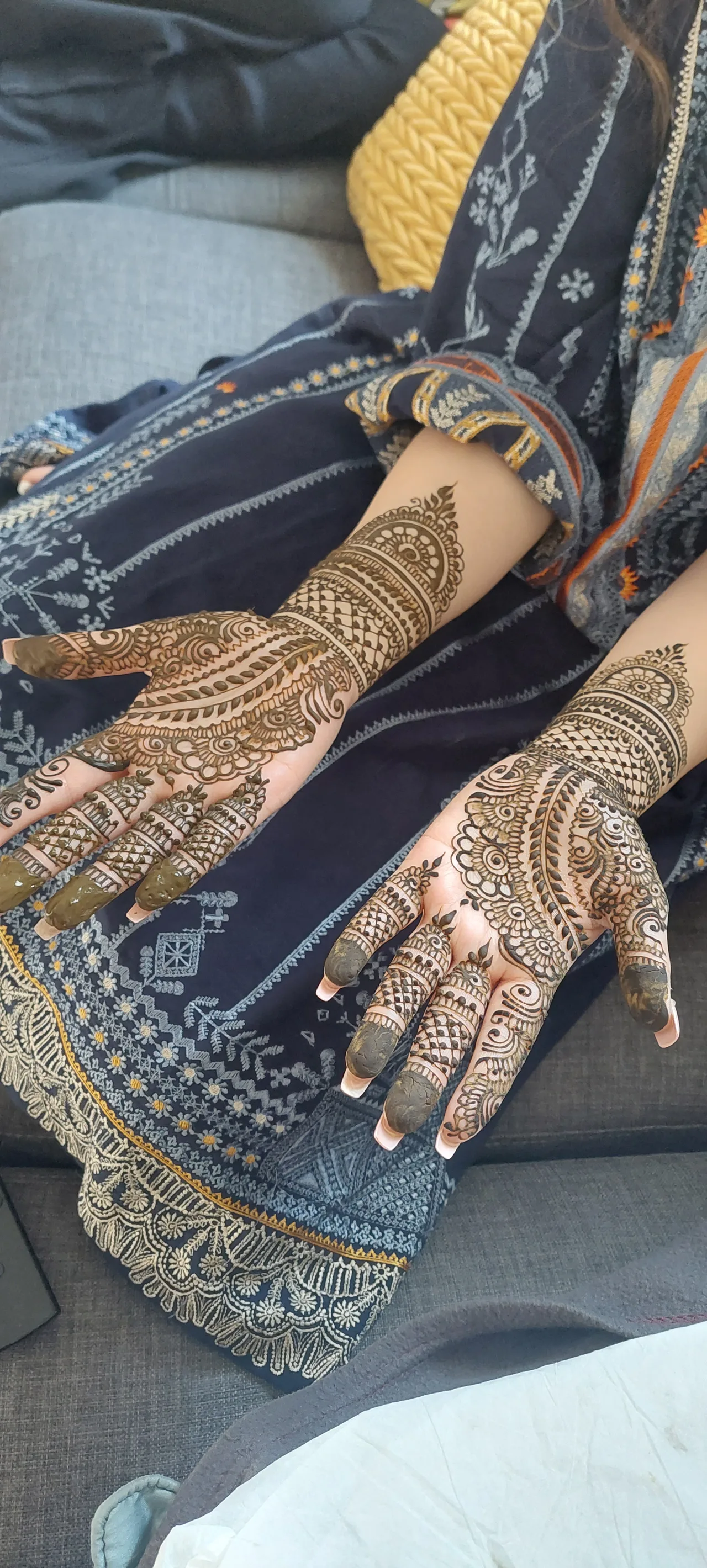
What is henna?
Henna is the older and more familiar of the two, a leaf-derived dye that humans have used for thousands of years. The colour comes from lawsone, the pigment in the dried, milled leaves, which bonds with keratin in the skin to leave a reddish-brown stain.
The essentials:
- Plant: Lawsonia inermis, the henna shrub
- Native to: North Africa, the Middle East, and South Asia
- History: used for 5,000+ years in celebration and adornment
- Colour: reddish-brown, developing via oxidation over 24–48 hours
What is Jagua?
Jagua is the newer arrival to most studios, a fruit-derived stain with deep roots in the Americas. Its colour comes from genipin, a compound in the unripe fruit that reacts with amino acids in the skin when exposed to oxygen to form an intense blue pigment.
The essentials:
- Plant: Genipa americana, the genipap fruit
- Native to: Central and South America
- History: used by Amazonian and circum-Caribbean indigenous peoples for body painting
- Colour: deep blue-black, developing over several hours to a couple of days
[Photo needed: a Jagua stain showing its blue-black tone — none of the current portfolio images are Jagua, which is reddish-brown henna only.]
Henna vs Jagua: a side-by-side comparison
Seeing the two compared directly makes the choice much clearer, because their strengths point in different directions. One leans traditional and warm; the other modern and cool.
| Feature | Henna | Jagua |
|---|---|---|
| Source | Henna plant leaves | Genipap fruit |
| Colour | Reddish-brown | Deep blue-black |
| Time to peak colour | 24–48 hours | Within ~24 hours |
| Application time | Long dwell (6–8h) | Shorter (1–3h) |
| Stain duration | 7–14 days | 7–14 days |
| Best for | Bridal, traditional events | Modern, tattoo-style looks |
| Allergic reactions | Rare with natural henna | Slightly more common |
| Cultural roots | South Asian, Middle Eastern | South American |
Why does Jagua look like a real tattoo?
Jagua's appeal is its convincing tattoo-like finish, because its blue-black tone reads much like black ink on the skin. That single quality drives most of the requests I get for it.
People choose Jagua when they want:
- The look of a black-ink tattoo without the permanence
- A "test drive" of a tattoo design before committing
- A modern, minimalist aesthetic
- A clean, high-contrast look for photos and reels
Its colour develops and darkens over a few days until it reaches that deep blue-black, as documented descriptions of jagua tattoos confirm.
When should you choose henna over Jagua?
Henna is the right call whenever tradition and warmth are the point, because its reddish-brown colour and ritual meaning are woven into so many celebrations. For most of my Calgary bridal and cultural work, henna is simply what belongs.
Reach for henna when you want:
- Traditional bridal mehndi with cultural authenticity
- Eid, Diwali, or Karva Chauth celebrations
- The classic orange-to-red transformation as part of the experience
- Designs tied to family or spiritual significance
When should you choose Jagua over henna?
Jagua shines when you want a modern, immediate, tattoo-like result, because it skips henna's long warm-up and lands in cool dark tones. It's the more contemporary choice.
Reach for Jagua when you want:
- A modern body-art or tattoo aesthetic
- A tattoo-style look without the commitment
- Colour that's ready faster, without the full 48-hour wait
- A cool contrast alongside warm henna in the same design
Can you wear henna and Jagua together?
Yes — combining them is one of the most creative looks available, because their contrasting colours play beautifully off each other. It's a growing trend among my Calgary clients who want something distinctive.
Popular combinations:
- Henna designs with Jagua accents in the negative space
- Bridal henna with fine Jagua detailing
- Henna on the hands, Jagua on the feet (or the reverse)
- Layered, multi-tone designs for parties and shoots
[Photo needed: a combined henna-and-Jagua design showing both the reddish-brown and blue-black tones together.]
Why must you beware of "black henna"?
This is the most important section in this entire post, because "black henna" is not henna, not Jagua, and not safe. It's natural henna (or nothing of the sort) adulterated with PPD — a coal-tar hair-dye chemical — to force a fast, jet-black stain.
The FDA warns that the additive used to blacken henna is often p-phenylenediamine (PPD), which can cause dangerous skin reactions, including chemical burns, scarring, and lifelong sensitisation. Protect yourself:
- Real natural henna is never jet-black on day one — it starts orange
- Real Jagua is blue-black and develops gradually, not instantly
- Always ask: "Is this natural henna or natural Jagua?"
- If the answer is "black henna," refuse the service
How does aftercare differ between henna and Jagua?
The two need slightly different handling, because their chemistry and timelines aren't identical — though the spirit of the aftercare is the same. Here's the short comparison.
- Henna: scrape off dry, no water, peaks around 48 hours
- Jagua: usually washed off (it's a gel), develops faster — often within 24 hours
- Both: avoid soap and exfoliants for about a week, and seal with oil before water
When you wear both together, follow the gentler henna timeline for the whole design. For how long either will linger, see how long does henna last.
Book with Henna by Arooj
Curious about henna or Jagua for your next Calgary event? Explore my party and event henna options — and if you want to understand exactly what goes into a safe, natural paste, just ask.
Frequently asked questions
Is Jagua safer than henna?
Both natural henna and natural Jagua are generally safe for most people, though Jagua reactions appear to be slightly more common than reactions to pure henna. Neither should be confused with PPD-based 'black henna,' which is a chemical product and genuinely dangerous. As with any body art, a patch test beforehand is wise — especially with Jagua.
Does Jagua stain darker than henna?
Jagua stains a deeper, cooler colour — blue-black — while henna stains warm reddish-brown. So Jagua looks closer to a real tattoo, but 'darker' depends on what you mean: Jagua is darker in tone, while a well-developed henna stain on the palms is rich and deep in its own warm way.
Can I get Jagua done in Calgary?
Yes. Jagua is less common than henna here but growing, especially for modern party and event looks and as a tattoo-style alternative. I offer Jagua alongside natural henna at Henna by Arooj, and the two can even be combined in a single design.
How is 'black henna' different from Jagua?
Completely different — and this matters for your safety. Jagua is a natural fruit extract that stains blue-black gradually. 'Black henna' is henna adulterated with PPD, a hair-dye chemical that can cause chemical burns, scarring, and lifelong allergy. If something stains jet-black almost instantly, treat it as a red flag and refuse it.
Can I combine henna and Jagua on the same hand?
Yes, and it's a popular modern look. Artists use Jagua's blue-black for accents, outlines, or contrast against henna's reddish-brown — for example, henna on the hands and Jagua details on the feet, or Jagua filling negative space within a henna design. When wearing both, follow the gentler henna aftercare timeline.
Which lasts longer, henna or Jagua?
They're similar — both typically last about 1–2 weeks before fading. Henna fades through warm amber tones; Jagua fades through cooler grey-blue tones. As with henna, body part and aftercare affect Jagua's longevity more than the product itself.
Book your Calgary henna session
Bridal mehndi, party & event henna, and private appointments by Arooj — 100% natural henna, custom freehand designs.
View the service →Related articles
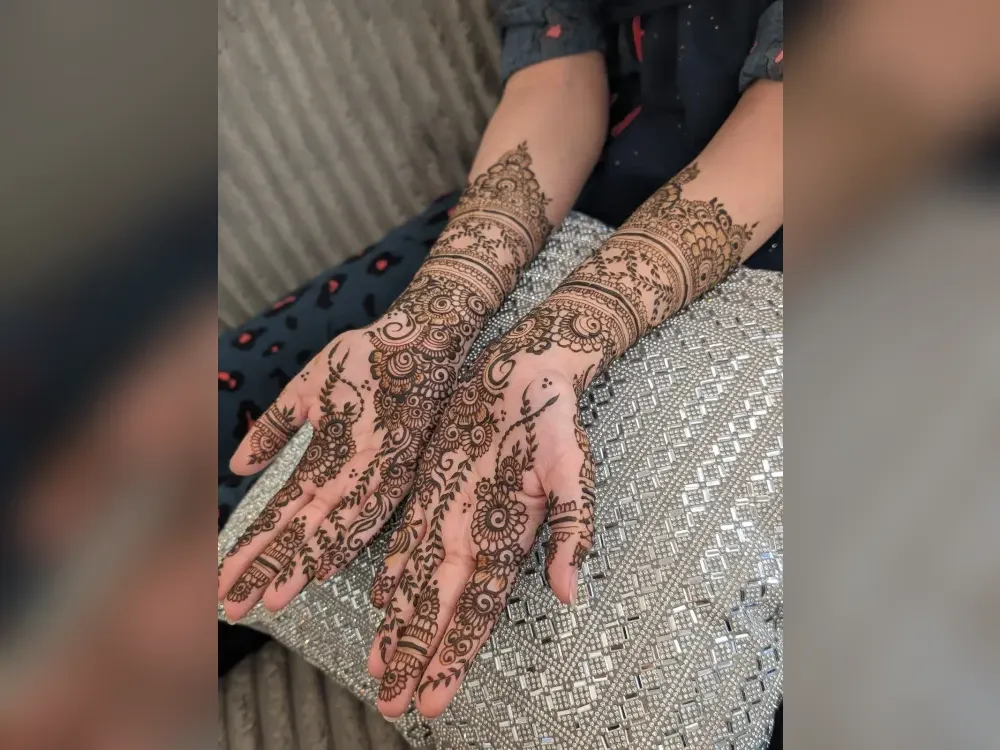
What's Actually in Natural Henna? (Ingredients, Safety, and Why It Matters)
Natural henna paste has four ingredients: henna powder, essential oils, sugar, and water. A Calgary artist explains what's really in the cone — and why chemical 'black henna' is not henna.
Read article →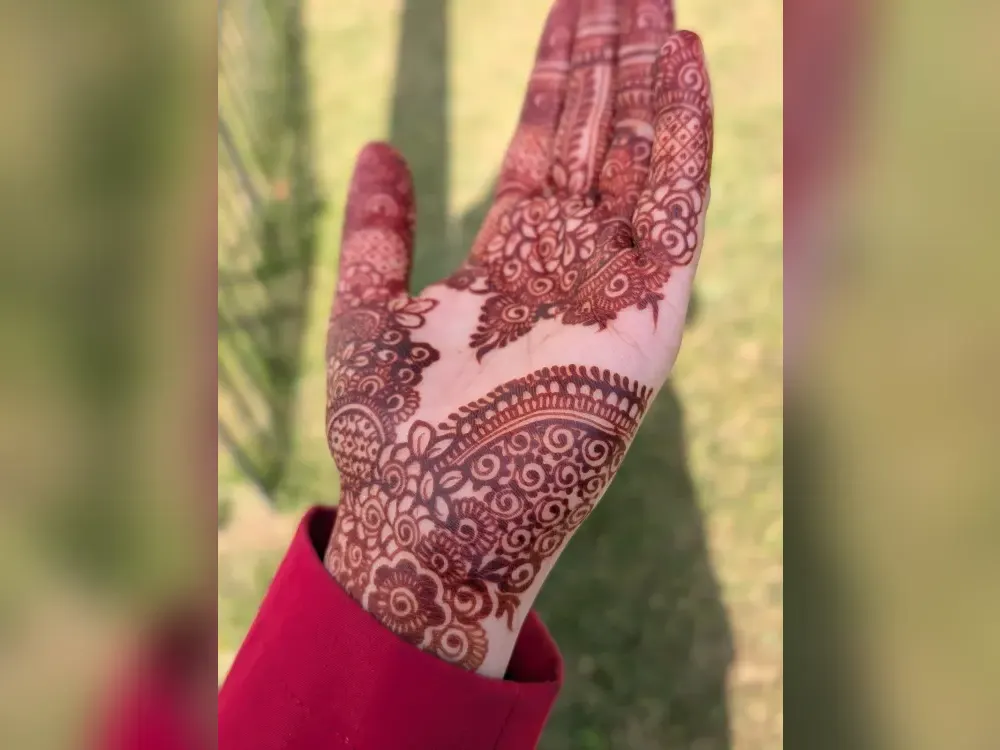
Why Some People Get Darker Henna Stains Than Others
Henna stain depth varies by skin chemistry, keratin density, body temperature, and aftercare — not the henna itself. A Calgary artist explains why your stain differs from your friend's.
Read article →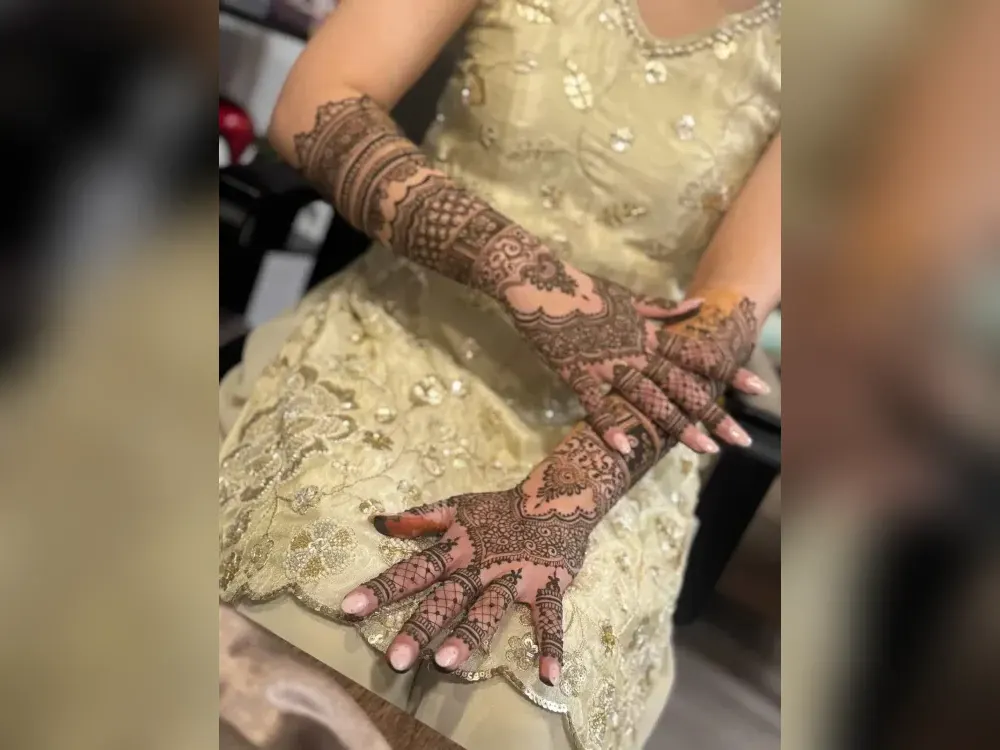
The Complete Henna Aftercare Guide: Make It Last 14+ Days
Great henna aftercare follows four phases — dwell time, removal, the first 24 hours, and the week after. A Calgary artist's complete guide to making your stain last 14+ days.
Read article →