How Long Does Henna Last? (A Calgary Artist's Honest Answer)
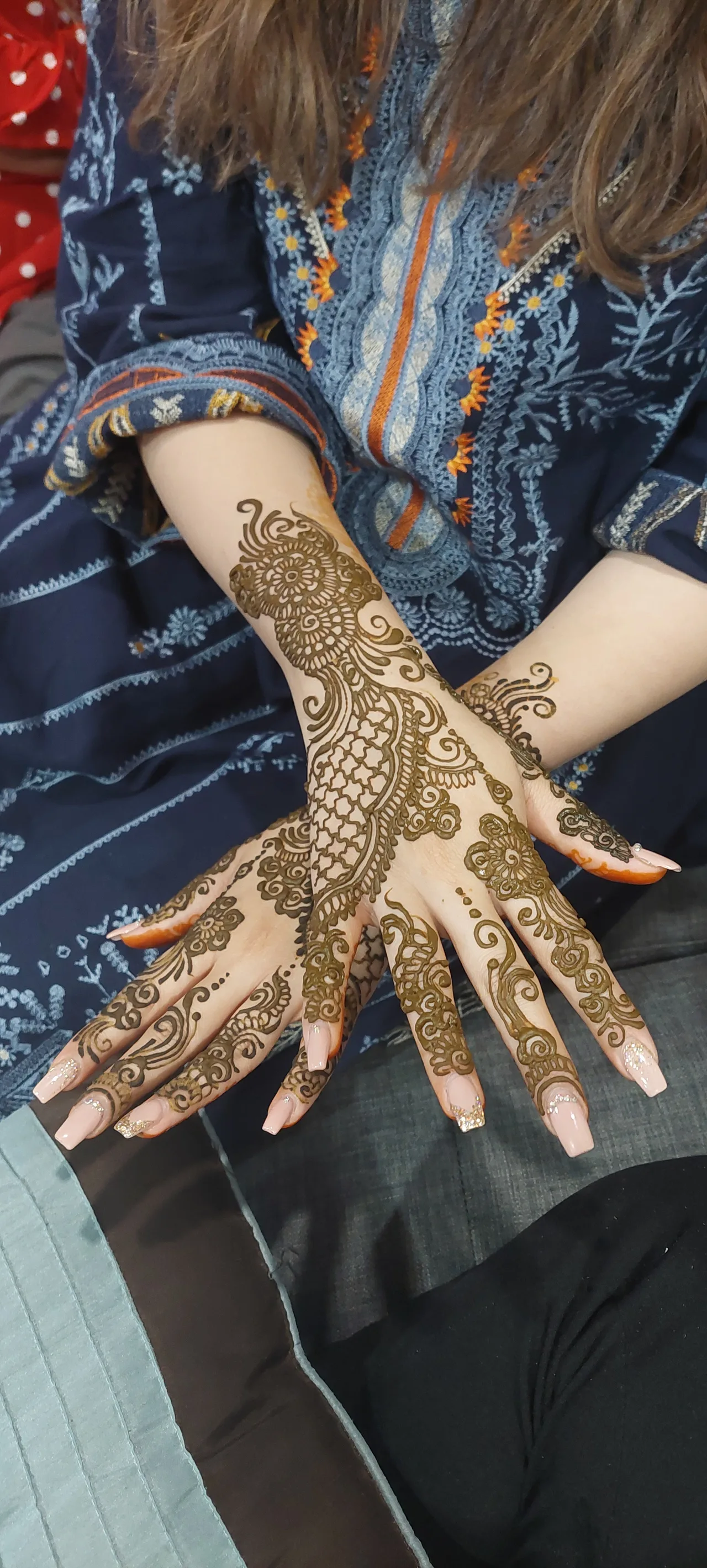
Natural henna typically lasts 7 to 14 days, with the color reaching its peak 24 to 48 hours after the paste comes off. Bridal-grade work on palms and fingertips can hold for two to three weeks. In my experience after 13+ years applying henna across Calgary, body location, your skin type, and the first 24 hours of aftercare matter far more than which artist applied it.
I get asked this question almost every week — by past clients, in DMs, and from nervous brides counting backward from their wedding date. So here is the honest, unhurried answer I give my own clients, with the chemistry and the real-world timelines that actually decide how long your stain survives.
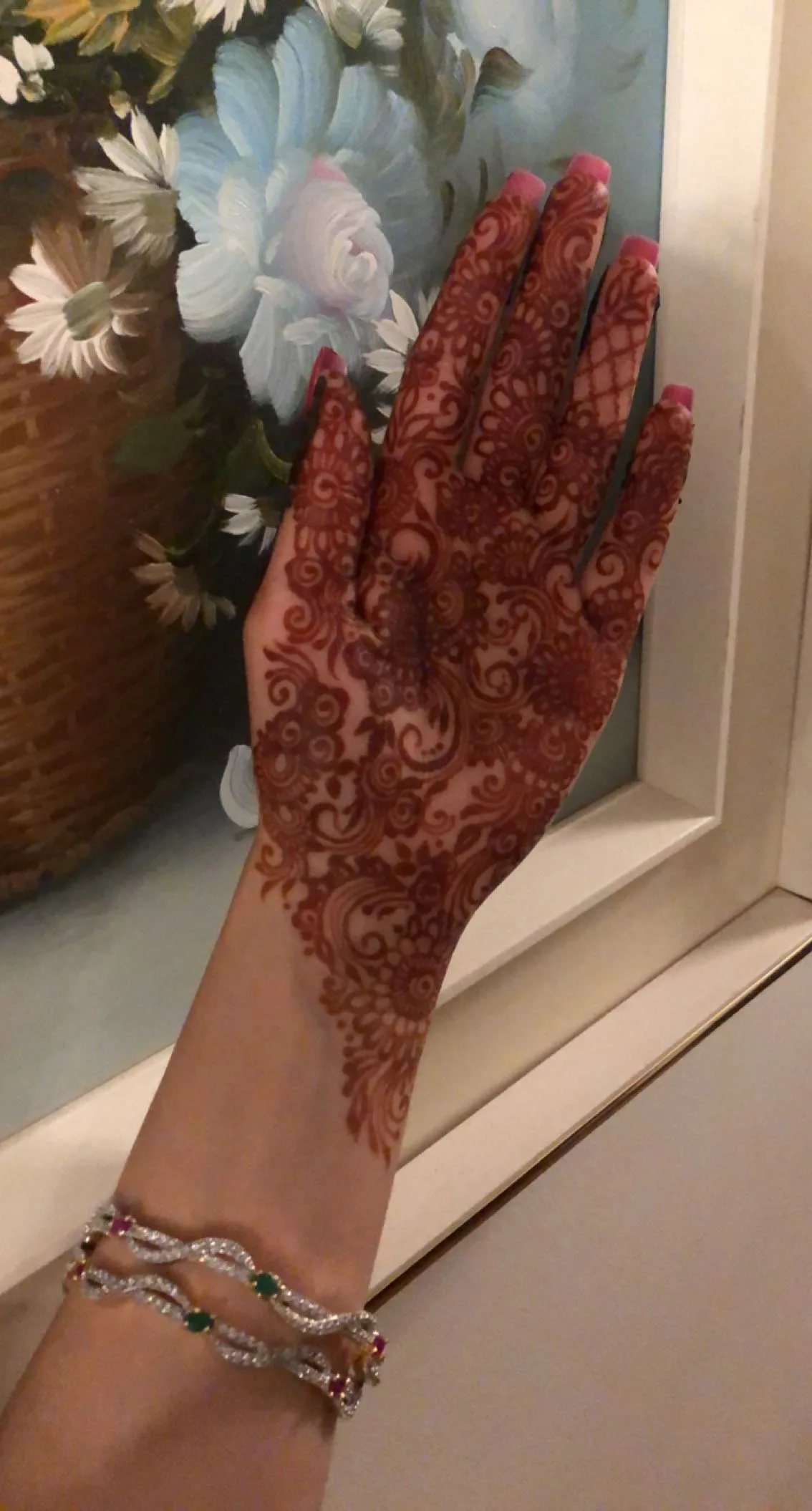
How long does henna last on different body parts?
Henna stain depth tracks closely with how thick the skin is and how much it is handled, because the dye binds to the outer keratin layer rather than soaking deep into living tissue. According to the chemistry, the colour comes from lawsone, the natural dye molecule in Lawsonia inermis leaves, which reacts with keratin in skin to leave a stain that wears off only as those surface cells shed.
That single fact explains the whole map of your hands:
- Palms and fingertips: 10–21 days — the deepest, longest stain
- Backs of the hands: 7–14 days
- Forearms and feet: 7–10 days
- Body and torso: 5–7 days
Palms hold longest because the skin there is the thickest on the body and packed with keratin for the dye to grab, while it also runs warmer with more blood flow. The thinner, frequently-washed skin on your forearms simply cannot keep a stain as long, no matter how skilled the artist or how patient you are.
The 24–48 hour rule: when does henna look its best?
Henna does not arrive at its final colour the moment the paste comes off — it oxidises and darkens for a day or two afterward, which is why the "fresh" photo never matches the "peak" photo. The shift is dramatic and predictable, and understanding it is the single most useful thing a first-time client can learn.
Here is the timeline I show every bride:
- Day 0 (application): bright pumpkin orange
- Day 1: orange deepening to brown
- Day 2 (peak): rich reddish-brown, sometimes nearly maroon
- Days 3–7: a slow, graceful fade
- Days 7–14: soft amber ghosting before it clears
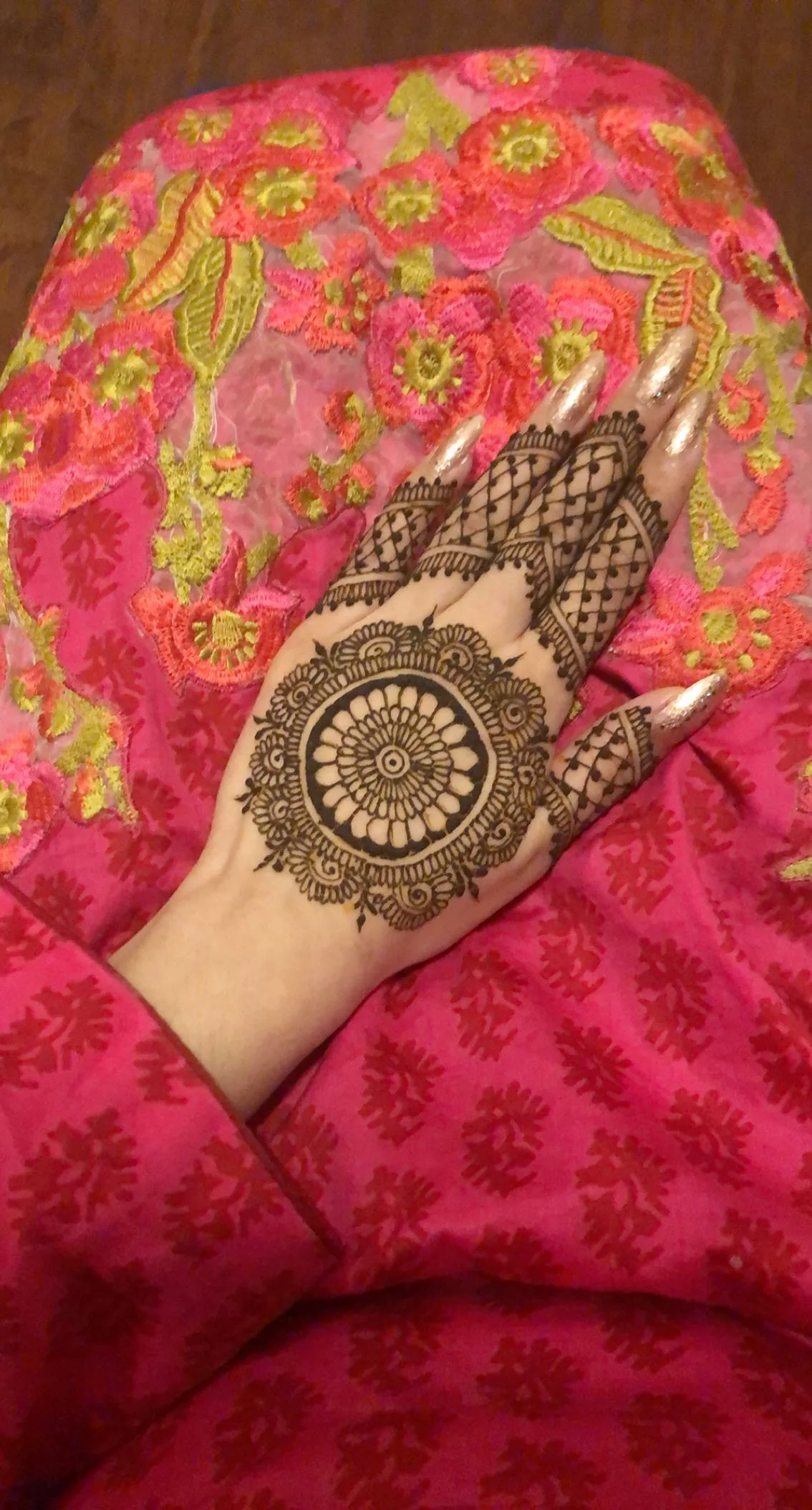
What affects how long henna lasts?
No two stains behave identically, because longevity is the product of several variables stacking together — not one magic ingredient. Dermatology resources note that PPD-based "black henna," sometimes sold as a longer-lasting alternative, is not henna at all and a known cause of severe skin reactions — so a stain that lasts because of added chemicals is never worth it.
The honest list of what controls duration:
- Skin location — palms outlast forearms every time
- Skin chemistry — some people simply hold a stain naturally longer
- Henna quality — fresh, natural paste stains deeper than aged store cones; chemical "black henna" should be refused outright
- Application time — how many hours the paste stays on
- Aftercare in the first 24 hours — the single most controllable factor
How long does bridal henna last specifically?
Bridal henna is engineered to last, because it concentrates the densest work on the palms and fingertips where skin holds dye the longest, and because brides protect it more carefully than anyone. For my Calgary brides, well-cared-for bridal stains on the palms routinely stay photo-beautiful for two to three weeks.
This is also why I gently steer brides away from doing their mehndi night four to six weeks before the wedding. Henna peaks at 48 hours and fades through weeks two and three — so an early application means faded amber hands in the wedding photos. If you want to understand exactly how to coax out the richest colour, I walk through it in detail in my guidance on getting the darkest bridal henna stain.
Why does my henna fade faster than someone else's?
If your stain disappeared while your sister's lingered, the difference is almost always biology and behaviour rather than the henna itself. Skin that is drier and less oily tends to grip lawsone longer, and the person whose stain lasted probably kept their hands out of water and away from sanitiser during that critical first day.
The usual culprits behind a fast fade:
- Naturally oilier or thinner skin
- Frequent hand-washing or sanitiser use (very common for nurses and parents)
- Exfoliating products and scrubs
- Swimming or hot tubs within 48 hours
- Simply having the design on a faster-shedding body part
None of this means you did anything wrong — it means henna is a living, temporary art form that behaves a little differently on every person.
5 things that make henna fade faster
Once the stain is on, longevity becomes a matter of what you keep away from your skin, since each of these strips surface cells or attacks the dye directly. Keeping these in mind during the first week is the difference between a 7-day and a 14-day stain.
- Washing too soon after the paste is removed
- Hand sanitiser and soap — alcohol and surfactants lift the stain
- Chlorine from pools and hot tubs
- Exfoliation — scrubs, dry brushing, even gritty hand washes
- Dry, unmoisturised skin that sheds faster
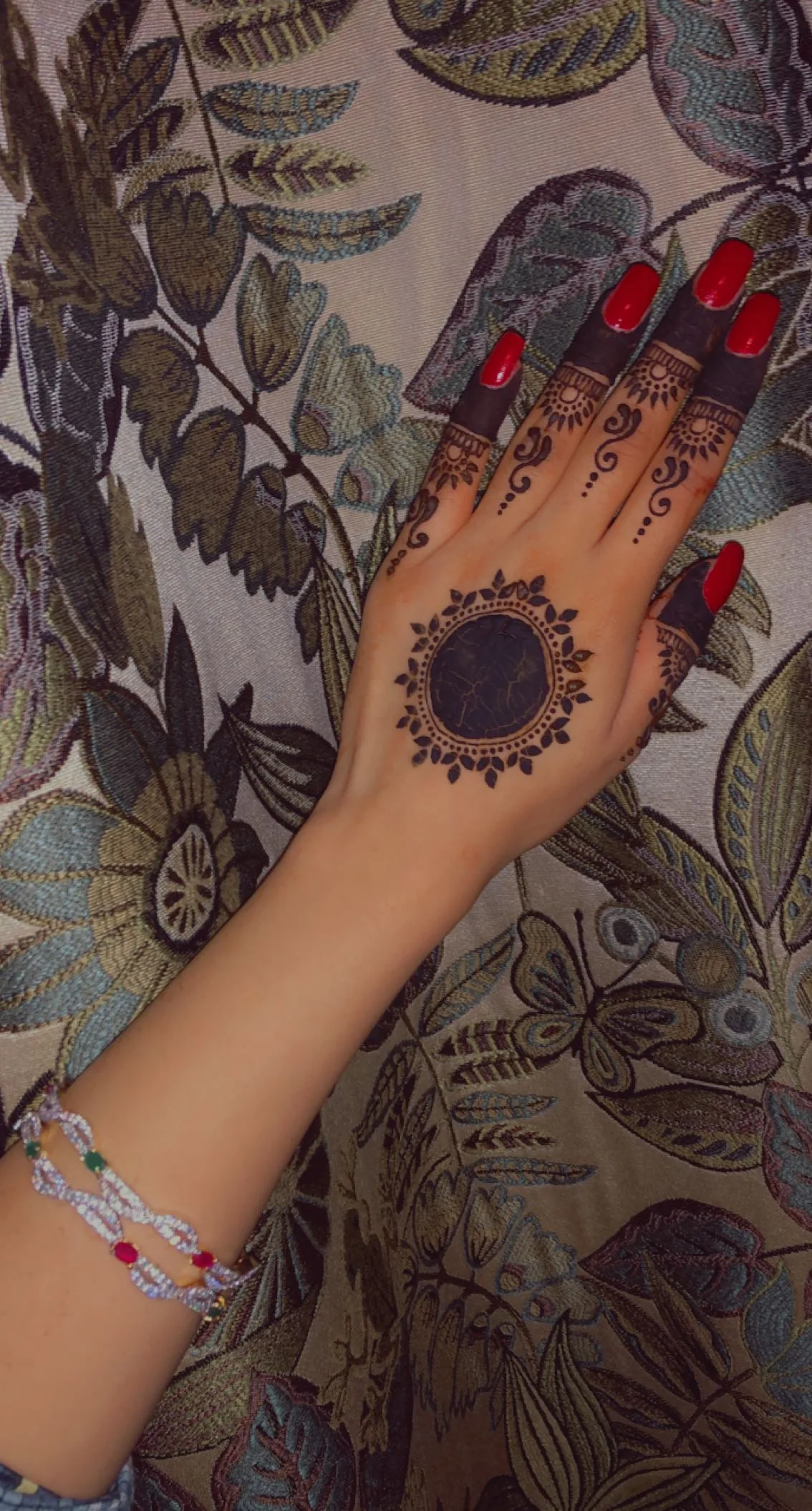
How does Calgary's climate change the timeline?
Cold, dry prairie air is quietly working against your stain, because low humidity and indoor heating dry out skin and speed up cell turnover. Henna has been used for thousands of years across warmer climates — the Natural History Museum traces its use through ancient Egypt and the Mughal era — so a Calgary winter is one of the tougher environments I work in.
In practice this means my clients in Calgary, Airdrie, Cochrane, and out toward Banff and Canmore benefit from a little extra diligence in winter: moisturise daily, oil before every hand-wash, and keep applications warm. The same design that lasts 14 days in July might give you 10 in January without that care.
Book with Henna by Arooj
Planning a wedding or celebration in Calgary? Explore bridal henna options or book a quiet, one-on-one private henna appointment where we can test how your skin holds a stain before the big day. When you're ready to make that colour last, I'll walk you through aftercare for every phase.
Frequently asked questions
How long does henna last on hands?
On the backs of the hands, natural henna usually lasts 7–14 days. On the palms and fingertips it holds longer — often 10–21 days — because the skin there is thicker and absorbs more dye. The exact number depends on your skin type and how carefully you protect the stain in the first 24 hours.
Can I make henna last longer than two weeks?
Yes, on the right body part. Palms and fingertips can carry a visible stain for two to three weeks when the paste stays on 6–8+ hours and you avoid water, soap, and exfoliation early on. On thinner skin like forearms, two weeks is realistically the ceiling no matter what you do.
Does henna fade faster on darker skin?
No. Skin tone does not change how long henna lasts — skin type does. Drier, thicker skin holds a stain longer than oily or thin skin regardless of tone. A deep stain simply reads more subtly against darker skin and more boldly against lighter skin, which is a contrast effect, not a difference in duration.
How long should I leave henna paste on?
For the deepest, longest-lasting stain, leave the paste on for at least 6–8 hours — overnight is ideal for bridal work. The longer the paste stays in contact with warm skin, the more lawsone transfers, and the longer the final stain survives.
Is it true that body heat affects how long henna lasts?
Yes. Warmth helps the dye develop and deepen, which is why I keep brides cozy during long sessions and why stains set better in summer than in a cold Calgary January. A warmer application and a warm first night generally produce a darker stain that lasts a few days longer.
How long does Jagua last compared to henna?
Jagua, a fruit-based body stain, lasts a similar 7–14 days but reaches its deep blue-black color within about 24 hours instead of 48. Henna fades through warm reddish-brown tones; Jagua fades through cooler grey-blue tones.
Will my bridal henna still look good in photos taken four days after application?
Usually yes — day four is often still beautiful, especially on palms and fingertips, though slightly past the absolute peak. This is exactly why timing matters: applying two to three days before your shaadi positions the richest color on your wedding day rather than weeks of fading before it.
Book your Calgary henna session
Bridal mehndi, party & event henna, and private appointments by Arooj — 100% natural henna, custom freehand designs.
View the service →Related articles
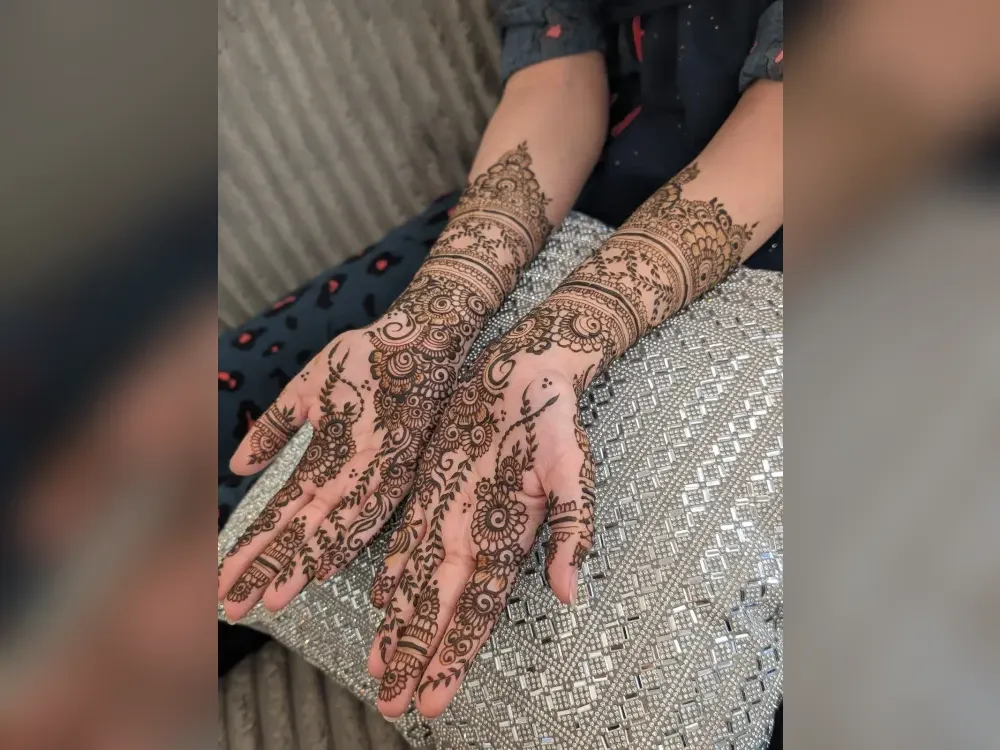
What's Actually in Natural Henna? (Ingredients, Safety, and Why It Matters)
Natural henna paste has four ingredients: henna powder, essential oils, sugar, and water. A Calgary artist explains what's really in the cone — and why chemical 'black henna' is not henna.
Read article →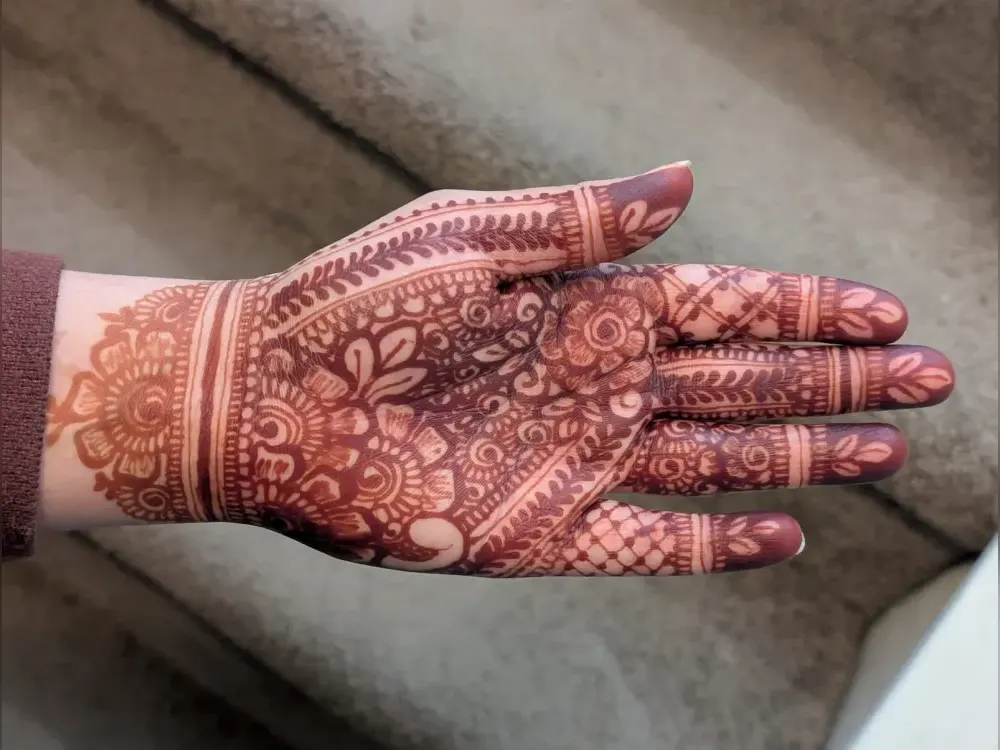
Henna vs Jagua: What's the Difference (and Which Should You Choose)?
Henna stains reddish-brown over 24–48 hours; Jagua stains blue-black within hours. A Calgary artist compares the two natural body arts — and warns why PPD 'black henna' is neither.
Read article →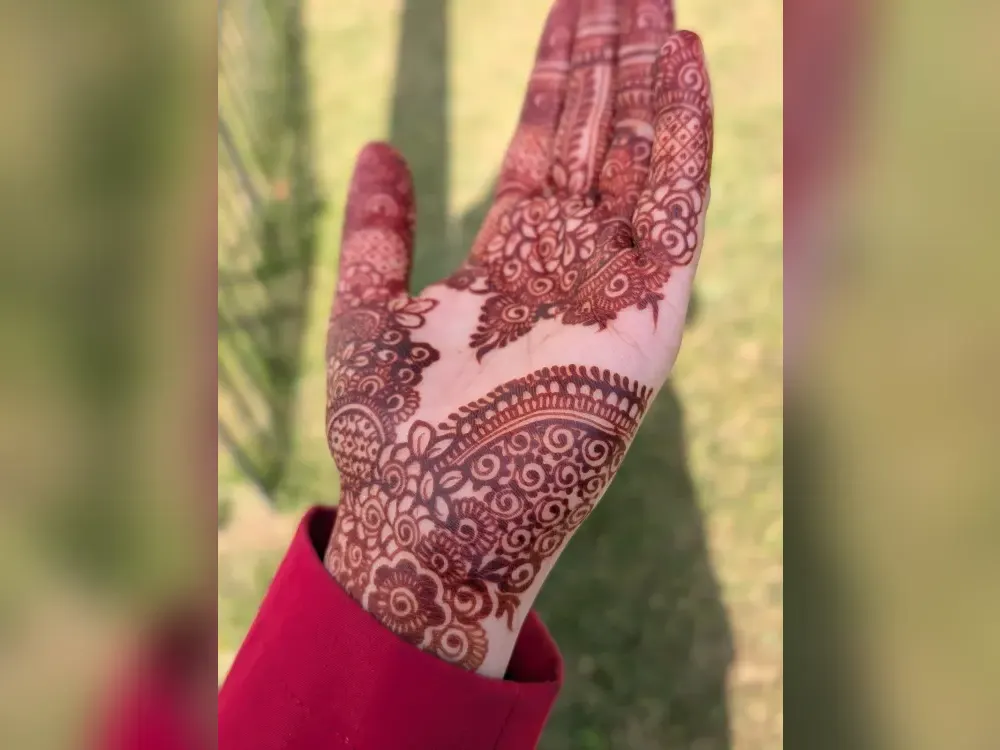
Why Some People Get Darker Henna Stains Than Others
Henna stain depth varies by skin chemistry, keratin density, body temperature, and aftercare — not the henna itself. A Calgary artist explains why your stain differs from your friend's.
Read article →