Henna Through the Calendar: A Calgary Guide to Seasonal Mehndi
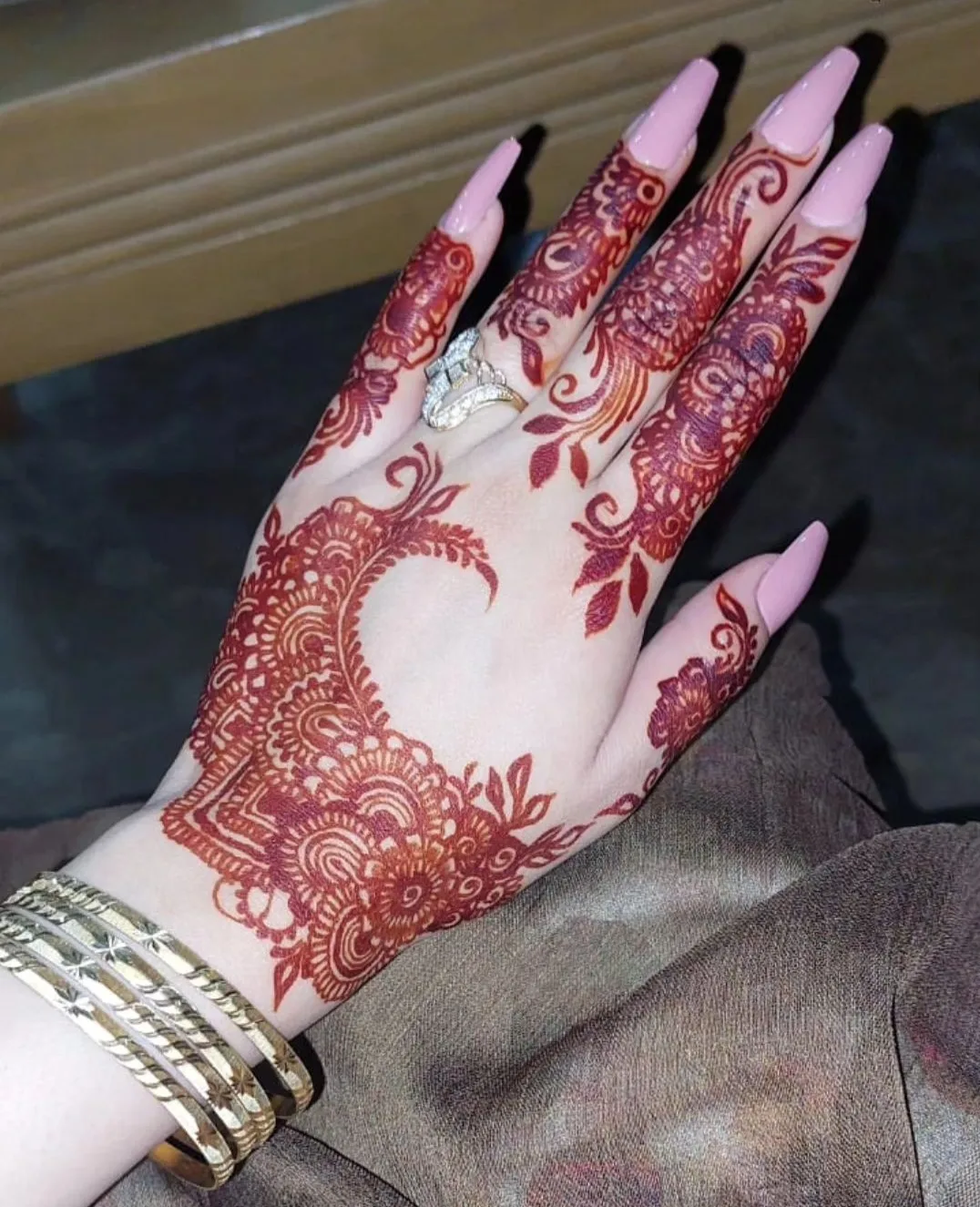
Henna in Calgary follows the calendar of South Asian and Middle Eastern celebrations — Eid, Karva Chauth, Diwali, Teej, Vaisakhi, winter holiday parties, and the year-round wedding season. Each occasion carries its own design conventions, timing, and traditions. After 13+ years in Calgary, I've come to think of the year as a series of henna seasons, and this guide maps them all so you can plan whichever ones are yours.
Because most of these festivals follow lunar calendars, their dates shift each year — so rather than chase specific dates, this guide focuses on the rhythm of the year and how far ahead to plan for each occasion.
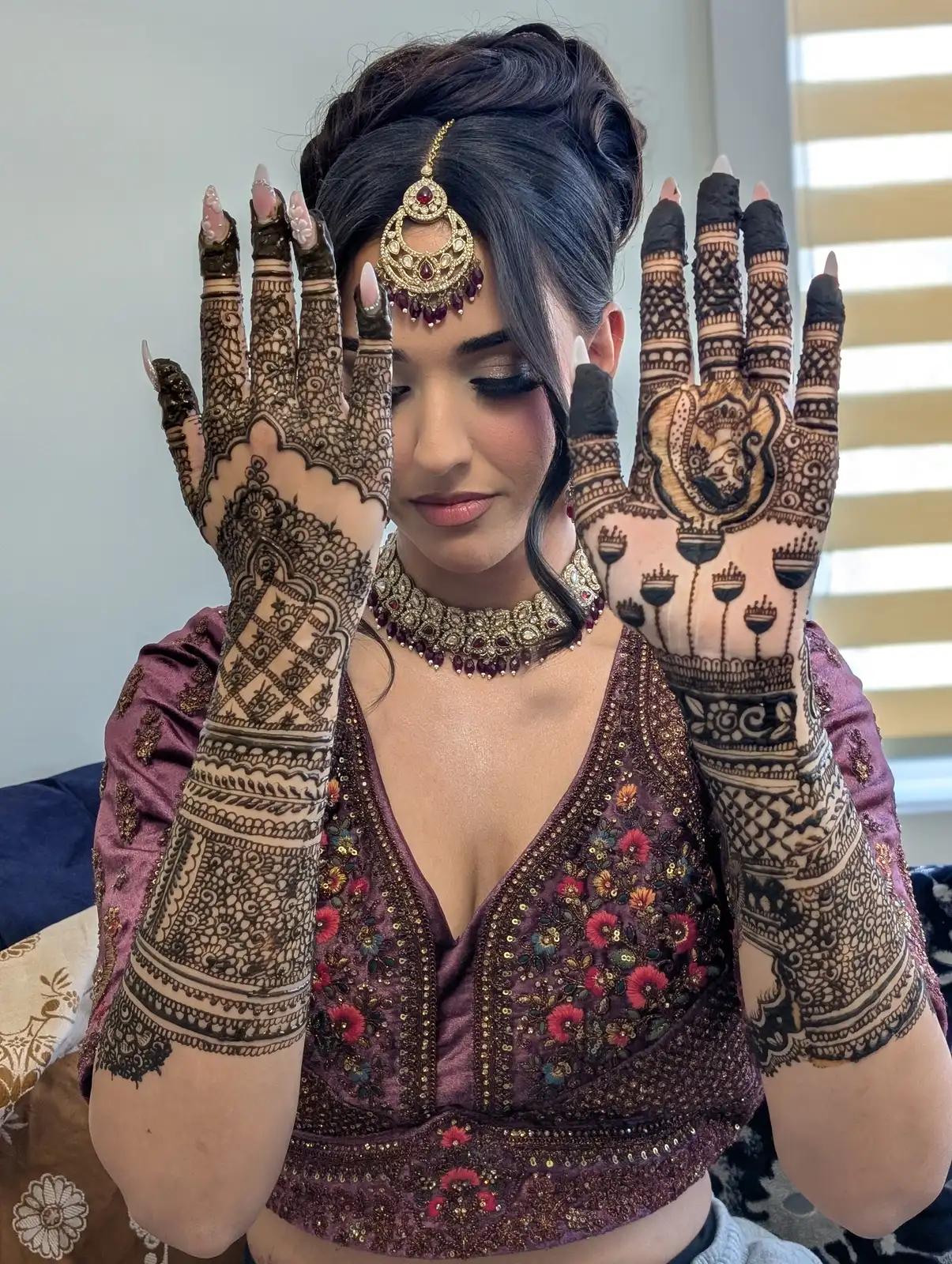
Why does henna mark the calendar?
Henna has marked celebrations and seasonal transitions for thousands of years, because it's woven into the festivals and rites of many cultures at once. UNESCO recognised henna rituals as intangible cultural heritage in 2024, noting its place in births, weddings, and festive occasions, and the Natural History Museum traces its ceremonial use across cultures and centuries.
In a diverse city, that makes the henna calendar a way of belonging:
- It marks transitions, festivals, and milestones
- It crosses Pakistani, Indian, Sikh, Bangladeshi, Arab, and other traditions
- For Calgary's communities, it's a thread of continuity with home and heritage
What I love about working across all of these traditions is how differently each one wears its henna. A bride's hands carry hours of dense detail; an Eid design is quick and joyful; a Karva Chauth pattern is quietly symbolic. The same art form shape-shifts to fit the meaning of the day — and over the course of a year in Calgary, I get to move through all of it.
Spring: Eid al-Fitr and the start of the season
Eid al-Fitr opens the henna year for many families, because it marks the end of Ramadan with henna applied the night before — Chand Raat. As Arab News documents, "for women, there is no Eid without mehndi," with hands and feet adorned the evening before the festival.
Because Eid follows the lunar Islamic calendar, it shifts about 10–11 days earlier each year and is confirmed only by the moon sighting. Eid designs tend to be lighter and joyful, often single-hand, and group bookings fill fast — I cover the details in my Eid henna guide. Plan to book 2–3 weeks ahead, earlier for Chand Raat parties.
Eid also tends to be a family affair rather than a solo appointment — mothers, daughters, sisters, and cousins often want their henna done together on the same evening, which is why group and at-home bookings dominate this season. If you're hosting, reserve early, because a single artist's Chand Raat evening fills quickly.
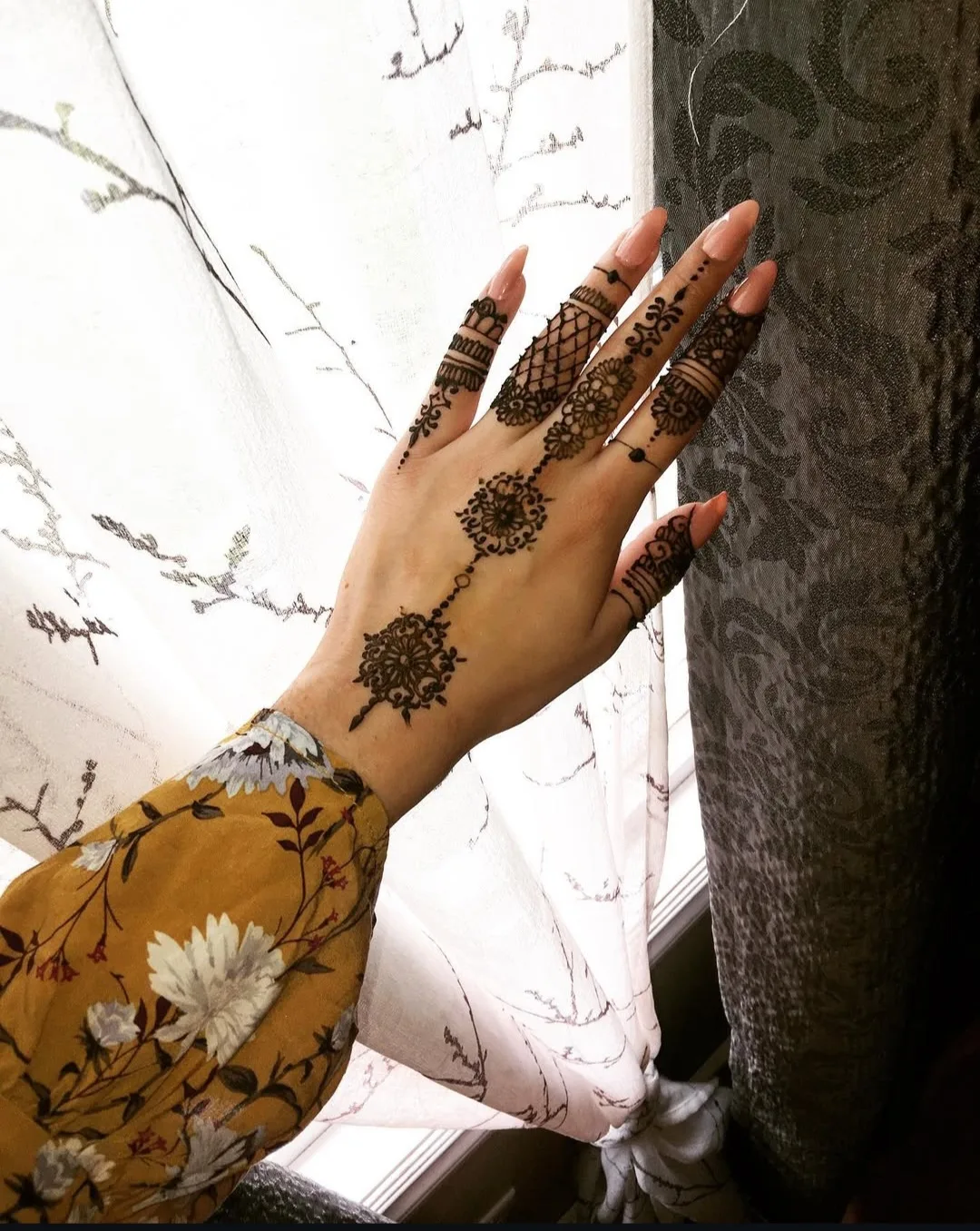
Summer: wedding season and Eid al-Adha
Summer is the heart of the wedding calendar, because Calgary's wedding season peaks across the warm months and bridal mehndi dominates bookings. Eid al-Adha, falling during the Hajj season roughly two lunar months after Eid al-Fitr, adds another celebration to the mix — less henna-focused than Eid al-Fitr, but still part of the tradition for many.
For summer weddings specifically, book your bridal artist at least 8 weeks ahead, as I explain in the complete Calgary bridal mehndi guide. Demand for both bridal and Eid work concentrates in these months.
For families, summer can mean several henna occasions stacked close together — a cousin's wedding, an Eid gathering, and a sangeet within the same few weeks. It's worth mapping them out in advance so the same trusted artist can cover them, rather than scrambling for whoever's available during the busiest stretch of the year.
Late summer: Teej and sangeet season
Late summer brings monsoon-season festivals and a busy run of pre-wedding events, because the social calendar fills as the warm months continue. Teej is a festival celebrated mainly by women, marking the arrival of the monsoon across North India, and it carries its own henna traditions; sangeet nights, the music-and-dance events before weddings, often include mehndi too.
Designs for these occasions tend to be bridal-inspired but lighter — celebratory without the full coverage of a bridal application.
If you're hosting or attending a sangeet in Calgary, henna is often part of the festivities for the bride's circle as much as the bride herself — sisters, cousins, and friends getting lighter designs to match the celebratory mood. Booking a single artist for a block of time covers the whole group comfortably.
Fall: Karva Chauth
Autumn's most henna-centred occasion is Karva Chauth, because applying mehndi is part of the tradition's preparations. Encyclopaedia Britannica describes Karva Chauth as a day when married women, mainly in northern India, fast from sunrise to moonrise and pray for their husbands' wellbeing, applying mehndi as part of the solah shringar. It falls on the fourth day of the lunar month of Kartik — October or November — and shifts each year.
Karva Chauth designs are more elaborate than party henna but lighter than bridal, usually on both hands and forearms. Book 4–6 weeks ahead, since demand concentrates around a single evening. My dedicated Karva Chauth mehndi guide covers it in full.
Karva Chauth has a particularly lovely communal quality — groups of married women often gather the evening before to have their henna done together while they prepare for the next day's fast. Those group sessions are some of the warmest evenings in my year, and they're also why the date books up fast: everyone wants the same single evening.
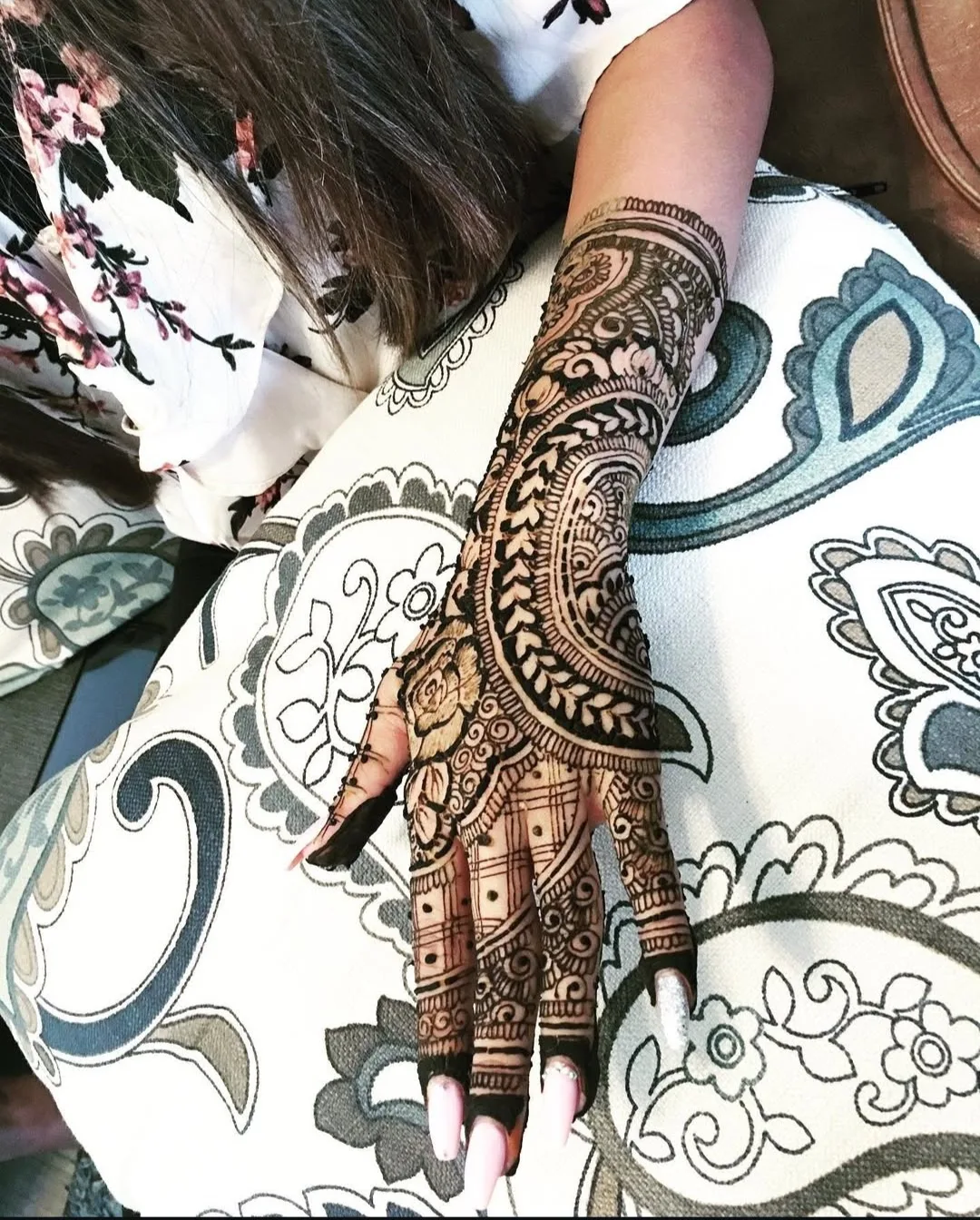
Fall: Diwali
Diwali brings a wave of festive henna, because the festival of lights is one of the year's biggest celebrations across several faiths. Encyclopaedia Britannica notes Diwali is a major festival in Hinduism, Jainism, and Sikhism, set by the lunar Hindu calendar and usually falling in late October or November — so, like the others, its date moves each year.
Diwali henna is typically floral, light, and joyful, applied at family gatherings and home celebrations. It's an increasingly popular occasion for henna among Calgary's Indian community.
Because Diwali is about light and brightness, the designs tend to stay airy rather than heavy — delicate florals, small mandalas, and open patterns that suit a festive evening without the commitment of a long sitting. It's a wonderful entry point for anyone curious about henna who isn't ready for full bridal-scale work.
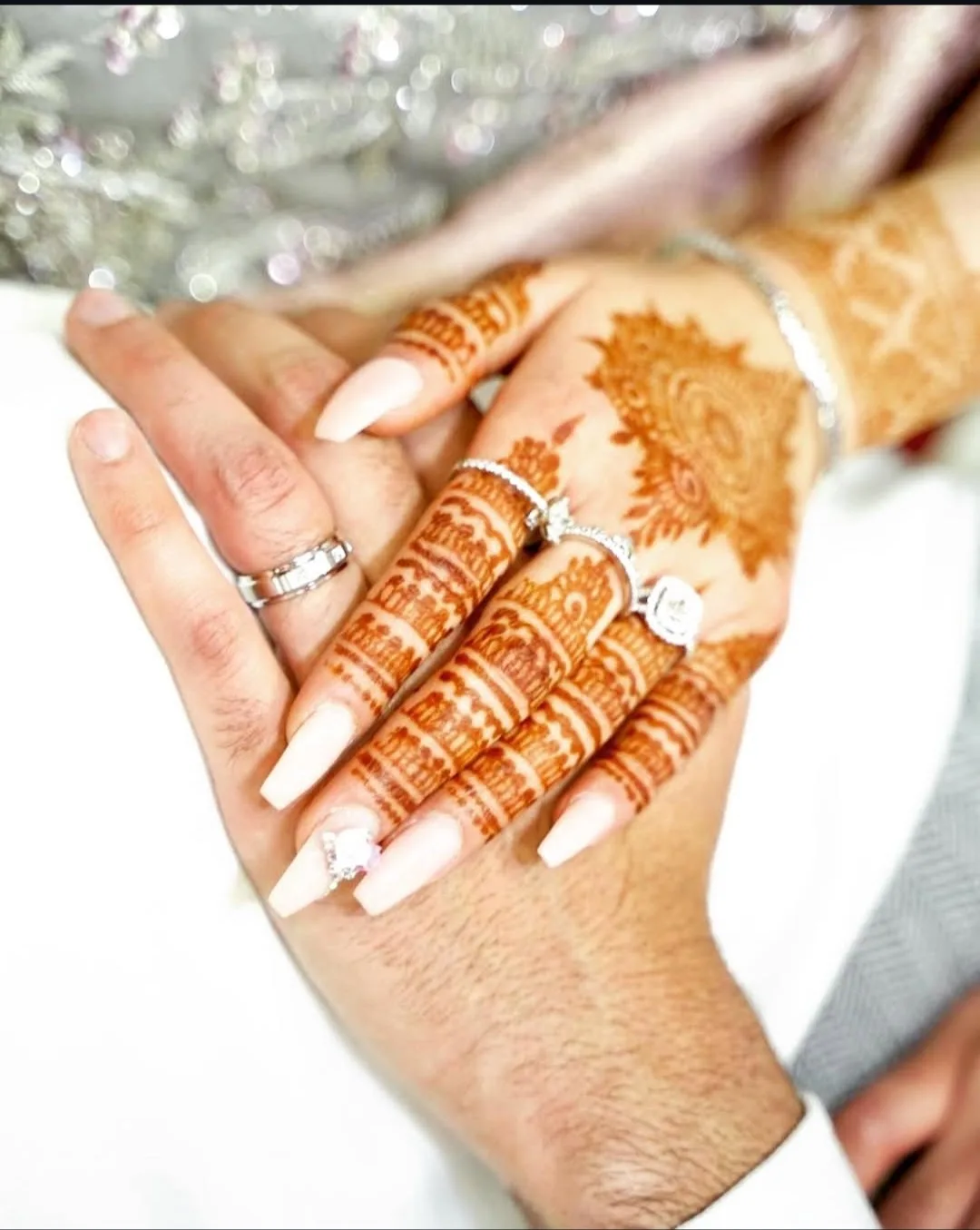
Spring again: Vaisakhi and Sikh festivals
Vaisakhi is the one major festival on this list with a fixed date, because unlike the lunar festivals it follows the solar calendar. Encyclopaedia Britannica notes that Vaisakhi (Baisakhi) marks the Sikh new year and the founding of the Khalsa, and — unlike many other festivals — follows the solar calendar, falling on April 13 or 14 each year. That makes it easy to plan around: mid-April, every year.
Sikh celebrations through the year are part of Calgary's vibrant calendar, and henna features in many family gatherings around them.
Winter: holiday parties and indoor celebrations
Winter keeps the henna calendar alive indoors, because celebrations don't stop when the snow arrives. Christmas and New Year parties, birthdays, and baby showers all bring henna requests, and Calgary's long winters actually make indoor venues an advantage for these gatherings.
Winter occasions include:
- Christmas and holiday parties
- New Year celebrations
- Birthday parties (year-round)
- Baby showers (year-round)
Calgary's winters are long, but they don't pause the celebrations — if anything, they push them indoors, where henna fits naturally into cozy gatherings. The one practical note is that cold, dry air shortens stains, so winter clients benefit from a little extra moisturising and warmth, exactly as in my complete henna aftercare routine.
Year-round: bridal mehndi
Bridal mehndi runs through every season, because weddings happen all year — timed to the couple, not the calendar. Calgary's wedding community spans Pakistani, Indian, Sikh, Bangladeshi, and Arab traditions, and bridal work is the backbone of the henna year. The full process lives in my complete Calgary bridal mehndi guide.
Year-round: baby showers, anniversaries, and self-care
Beyond the festivals, henna increasingly marks personal milestones, because it's a beautiful way to celebrate any occasion. Baby-shower henna is a growing trend, alongside anniversaries, "just because" designs, and quiet self-care appointments throughout the year.
Baby-shower henna in particular has taken off — belly designs for a mum-to-be's photoshoot, plus lighter hand designs for guests, turning the gathering into something memorable. These personal-milestone bookings are lovely precisely because they're low-pressure: there's no date dictated by the moon, so we can find a time that genuinely suits you, in any season.
How do designs change by occasion?
Each occasion calls for a different scale of design, because the time, intricacy, and purpose vary. A quick comparison:
- Bridal: dense, intricate, full coverage (4–6 hours)
- Eid: lighter, often single-hand (10–30 minutes)
- Karva Chauth: medium, both hands, focal motifs (1–2 hours)
- Diwali: floral, light, joyful (30 minutes to 1 hour)
- Party/event: customizable, often quick (10–30 minutes per guest)
Understanding this range helps you brief your artist clearly. If you arrive at a busy festival booking expecting full bridal detail in a 20-minute slot, neither of you will be happy — but matched correctly, a quick Eid design or a flowing Diwali floral can be just as satisfying as elaborate bridal work. The trick is choosing a design that fits the time and the occasion.
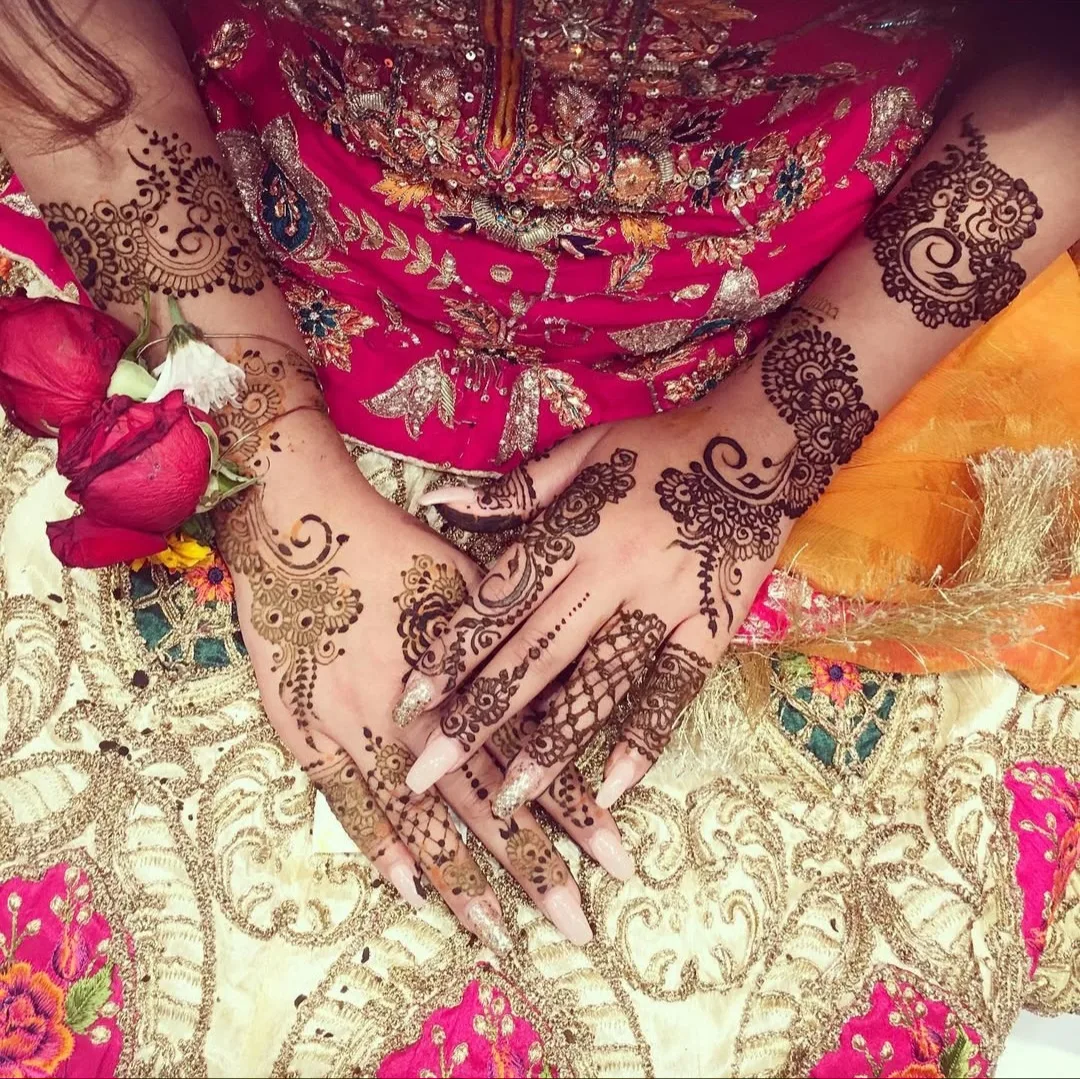
When should you book for each occasion?
Booking lead times scale with how concentrated and in-demand each occasion is, because festivals compress a lot of bookings into a short window. As a general guide:
- Eid: 2–4 weeks ahead (earlier for group/Chand Raat parties)
- Karva Chauth: 4–6 weeks ahead
- Diwali: 3–4 weeks ahead
- Bridal: 4–8 weeks ahead (8 weeks for summer Saturdays)
- Wedding-party guest henna: a few months ahead
- Birthdays and baby showers: 2–3 weeks ahead
Because the festival dates move with the lunar calendar, the safest approach is to reach out as soon as you know the approximate date rather than waiting for the official confirmation.
One more tip from experience: if you celebrate several of these occasions each year, it's worth building a relationship with one artist rather than starting fresh each time. An artist who already knows how your skin takes a stain and which styles you love can help plan your year with you — and you're far more likely to secure the popular festival dates as a returning client who reaches out early.
Why is Calgary's henna calendar unique?
Calgary's calendar reflects an unusually diverse, growing community, because so many traditions celebrate side by side here. Statistics Canada counted more than 2.5 million South Asian Canadians as of 2021, with a sizeable share in the Calgary region — Pakistani, Indian, Sikh, and Bangladeshi families among them.
A few things make the local calendar distinctive:
- A diverse South Asian community celebrating multiple traditions
- Cold winters that shape venue choices toward indoor gatherings
- Travel between Calgary and surrounding cities like Airdrie, Cochrane, and Banff
- A South Asian wedding and event community concentrated in and around NE Calgary
All of this means a Calgary henna artist isn't really working a single season — we're moving through a year-round rotation of traditions, each with its own pace and meaning. It's one of the things I find most rewarding about the work here: in one year I might design for a Pakistani bride, a houseful of cousins on Chand Raat, a circle of women on Karva Chauth eve, and a child at a winter birthday party.
Book with Henna by Arooj
Hosting a celebration in Calgary this season? Explore my party and event henna options for any occasion on the calendar — and if you'd like to understand how long your stain will last for a multi-day festival, see how long does henna last.
Frequently asked questions
What's the busiest season for henna in Calgary?
Late spring through early fall is generally the busiest, because it overlaps wedding season and several major celebrations. Eid, the summer wedding months, and the autumn run of Karva Chauth and Diwali all draw heavily on the same pool of artists, so popular dates in those windows book up earliest.
How do I find a henna artist for a specific cultural event?
Look for an artist experienced in the specific occasion and design style you want — bridal, Eid, Karva Chauth, or party henna each have their own conventions. Book early for the festival seasons, confirm they use 100% natural henna, and ask whether they travel to your venue or host at a studio.
When is Karva Chauth, and how should I plan?
Karva Chauth falls on the fourth day of the lunar month of Kartik, which lands in October or November and shifts each year. Plan to book 4–6 weeks ahead, since demand concentrates around that single evening. See our dedicated Karva Chauth guide for the full details.
Is Eid henna different from bridal henna?
Yes. Eid henna is lighter and faster — often a single hand or both hands, taking 10–30 minutes — while bridal henna is dense, full-coverage work that can take four to six hours. Eid designs celebrate the gathering; bridal designs are a centrepiece in their own right.
Can I book the same henna artist for multiple cultural events through the year?
Absolutely, and many families do — building a relationship with one artist means they already know your skin and your style preferences. Just book each occasion ahead of its season, especially for the busy festival and wedding months.
What's the best season for getting bridal henna in Calgary?
Bridal henna happens year-round, timed to your wedding rather than a season. The main planning note is that summer and Eid-adjacent weddings are in highest demand, so if you're marrying then, book at the 8-week end of the usual 4–8-week window.
How do Calgary's South Asian holidays affect henna bookings?
They create clear demand spikes. Eid, Karva Chauth, and Diwali each concentrate bookings around a short window, and because their dates move with the lunar calendar each year, it's smart to reach out as soon as the approximate date is known rather than waiting for the official confirmation.
Do you do henna for Christmas and New Year parties?
Yes — henna is popular for winter celebrations, birthdays, baby showers, and New Year gatherings, not just traditional South Asian festivals. Indoor venues make winter bookings comfortable even in a cold Calgary January.
Book your Calgary henna session
Bridal mehndi, party & event henna, and private appointments by Arooj — 100% natural henna, custom freehand designs.
View the service →Related articles
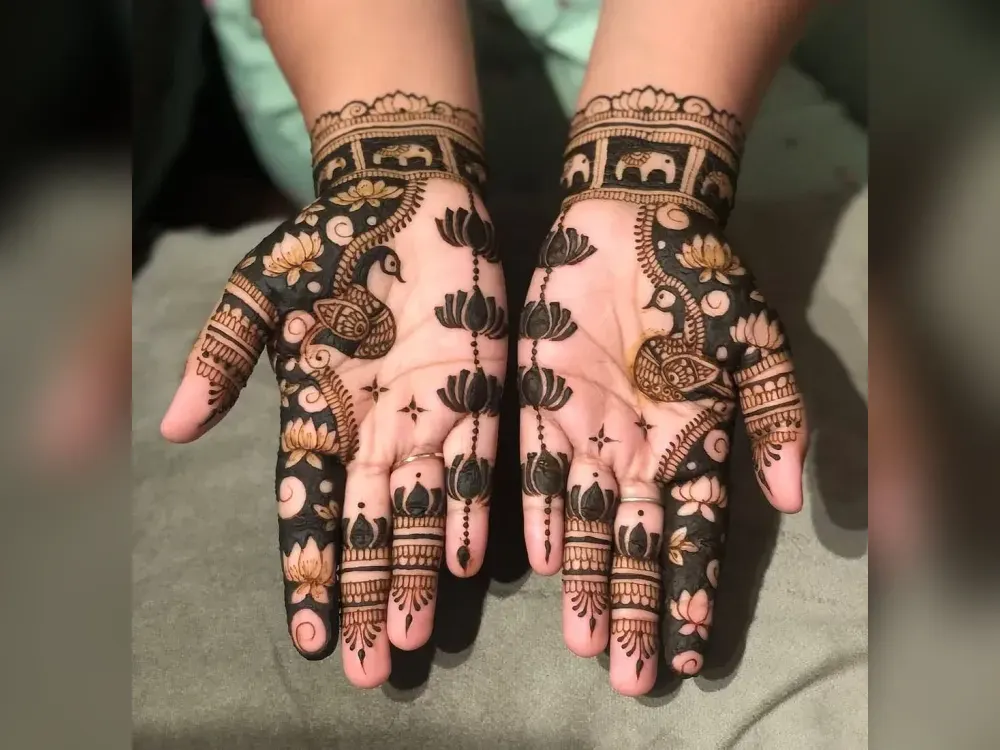
Karwa Chauth 2026 in Calgary: Your Mehndi Timing and Booking Guide
Karwa Chauth 2026 falls on Wednesday 28 October in Calgary, with moonrise around 7:25 pm. Apply your mehndi the evening of 27 October, and book your Calgary artist early — evening slots are limited.
Read article →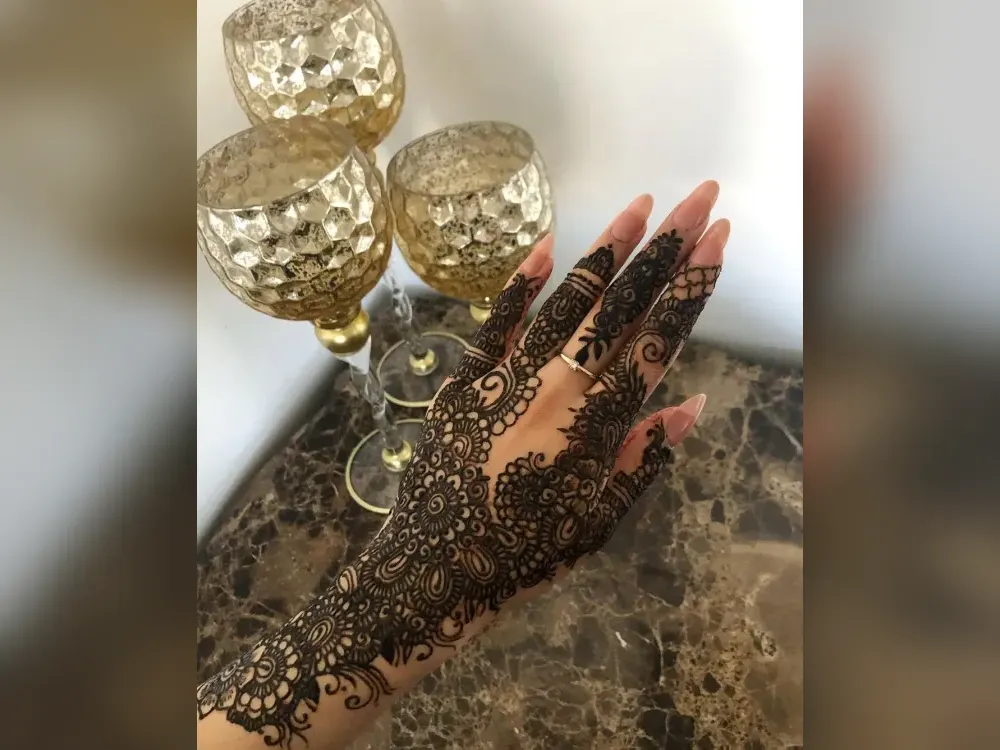
Eid Henna in Calgary: Traditions, Timing & Booking Guide
For Eid in Calgary, book your henna artist 2–3 weeks ahead and apply on Chand Raat, the night before. A Calgary artist on Eid henna traditions, timing, and group bookings.
Read article →