The Complete Calgary Bridal Mehndi Guide
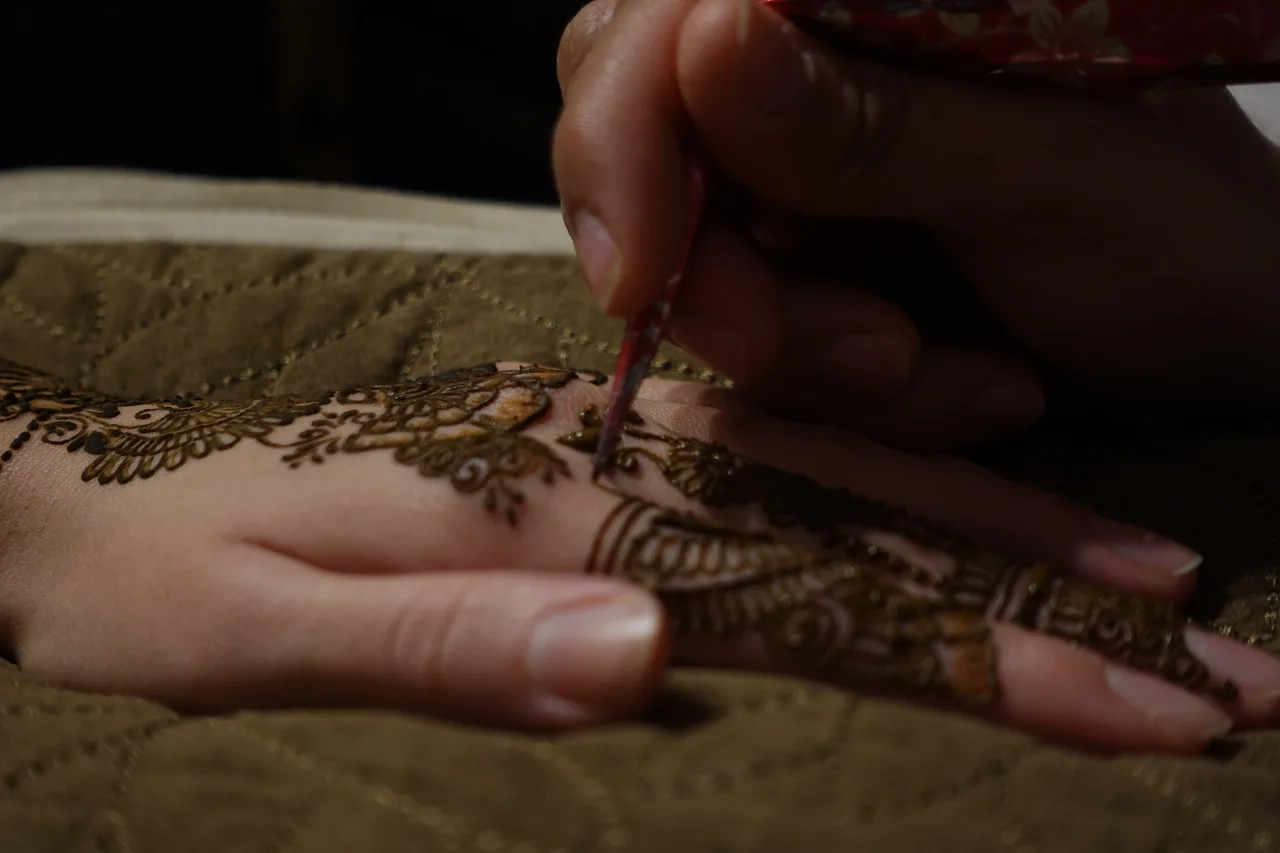
Bridal mehndi in Calgary follows a clear timeline: book your artist 4–8 weeks out, schedule a trial 4–6 weeks before the wedding, and apply the henna two days before the shaadi for peak colour in your photos. Calgary's bridal mehndi community spans Pakistani, Indian, Sikh, Bangladeshi, and Arab traditions, with three main style families — Pakistani (dense Mughal), Indian (focal motif), and Arabic (bold floral). After 13+ years as a Calgary bridal henna artist, I've written this as the one guide I wish every bride had from the start.
It's long, because bridal mehndi touches everything — timing, style, booking, the trial, the wedding-week countdown, aftercare, and your photos. Use the sections that apply to you, and treat the whole thing as the resource you return to as your date gets closer.
Why does bridal mehndi matter so much?
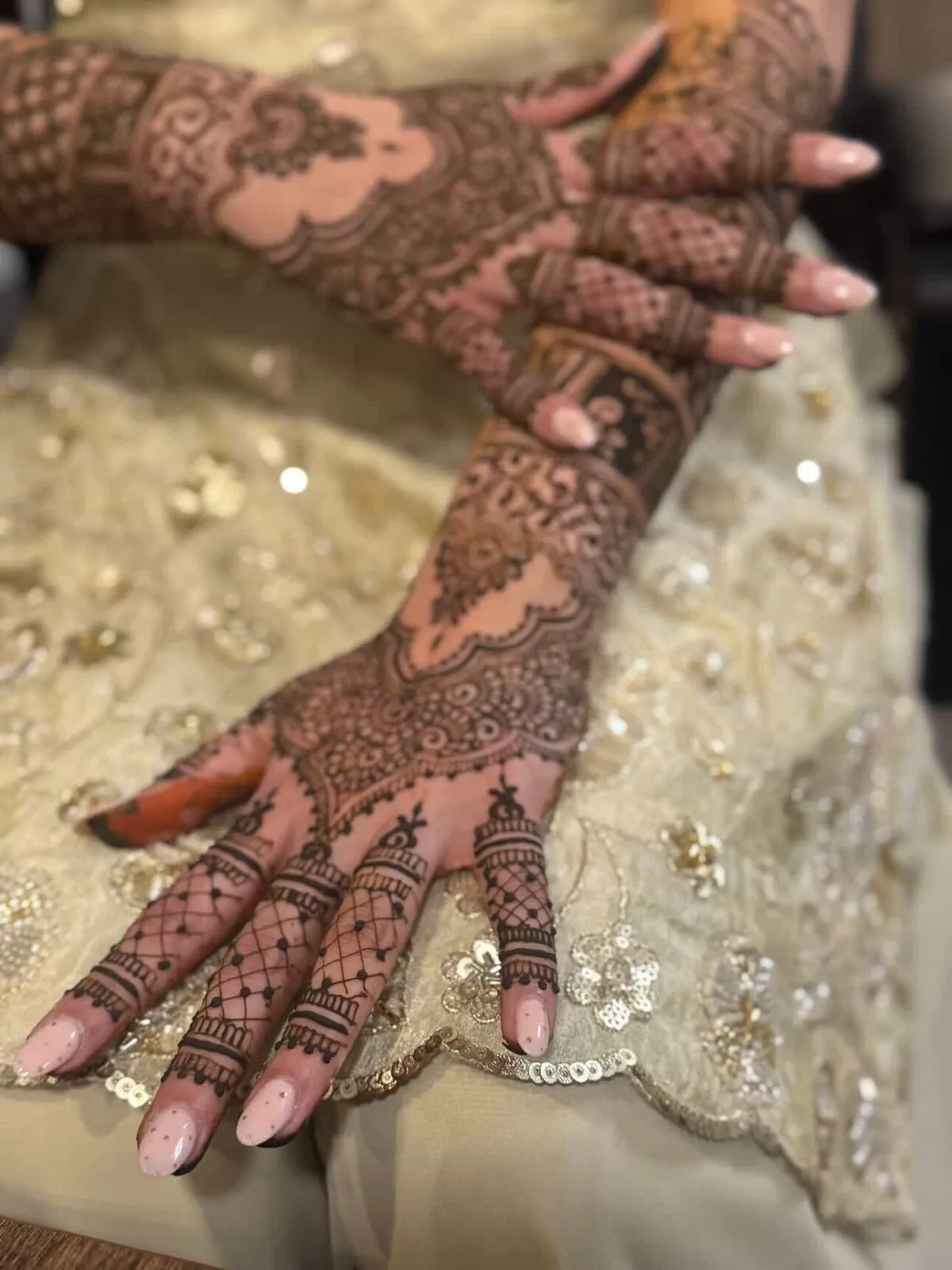
Bridal mehndi carries weight that goes far beyond decoration, because it sits at the intersection of centuries of tradition and one of the most personal mornings of your life. UNESCO inscribed henna rituals on its list of intangible cultural heritage in 2024, recognising the role these practices play in weddings and celebrations across cultures.
For a bride, that significance shows up in three ways:
- Cultural: a tradition handed down through generations, with spiritual and celebratory meaning
- Personal: the application is one of the most meaningful, unhurried hours of the entire wedding week
- Visual: in countless wedding photos, the henna is the bride — her hands tell the story
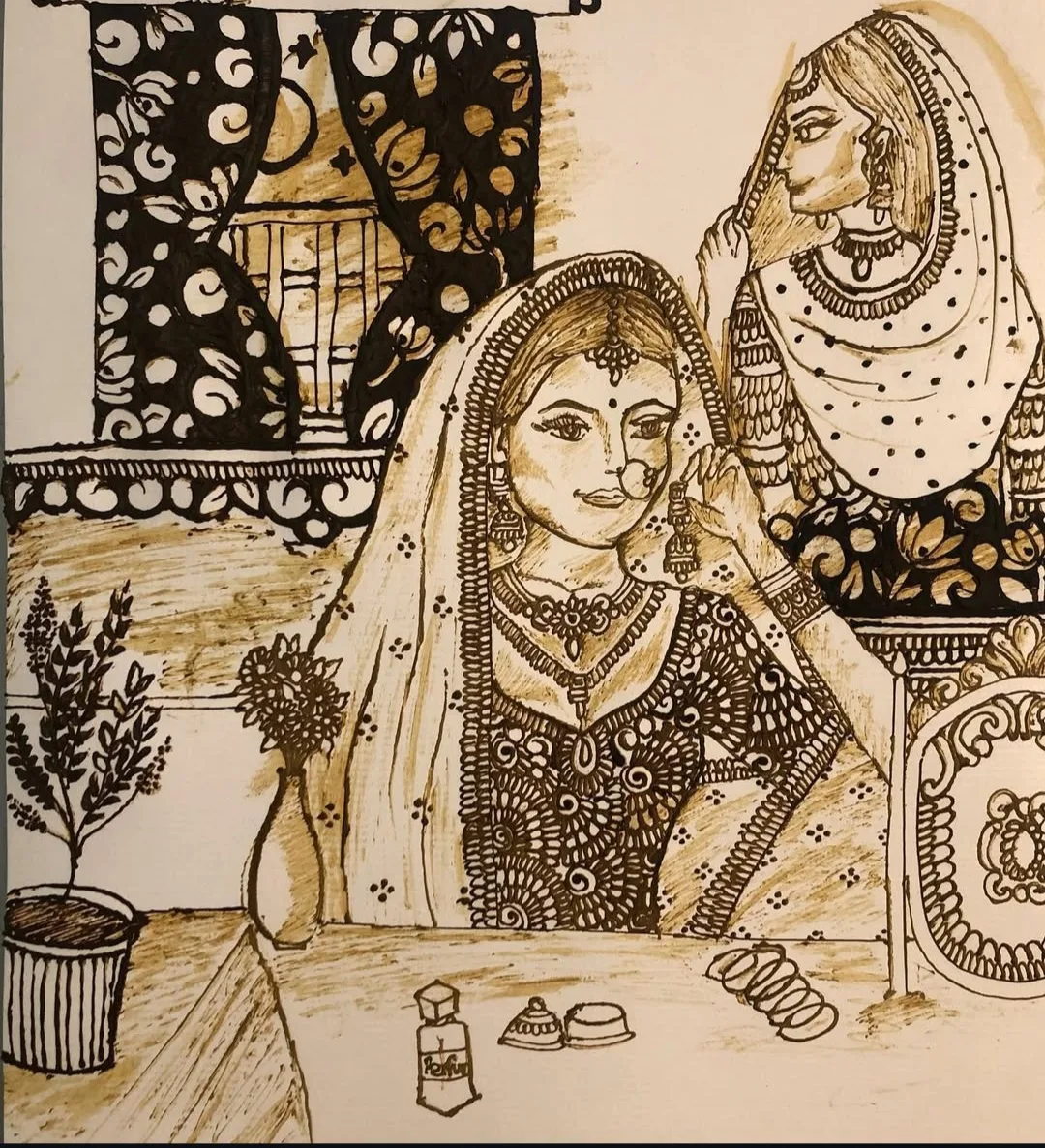
I've sat with brides who teared up the moment their hands were finished — not because of the design itself, but because of everything it represented: their mother beside them, a tradition older than any of us, the wedding finally feeling real. That emotional weight is exactly why bridal mehndi deserves to be planned with care rather than squeezed into the final week, and why this guide treats timing and trust as seriously as design.
Section 1: When should you start planning your bridal mehndi?
Planning early is the difference between getting the artist you want and settling, because experienced bridal artists hold only a handful of long sessions each weekend. The booking arc is simple once you see it laid out, and I cover it in depth in when to book and apply your bridal henna.
- 4–8 weeks out: send your inquiry and confirm the date (most artists take a deposit; aim for 8 weeks in summer)
- 4–6 weeks out: trial session
- 2 days before the wedding: application
Section 2: How do you choose your bridal mehndi style?
Your style choice shapes everything from session length to how your hands photograph, so it's worth understanding the three families before you commit. I compare them in detail in Pakistani vs Indian vs Arabic bridal mehndi, but here's the essence.
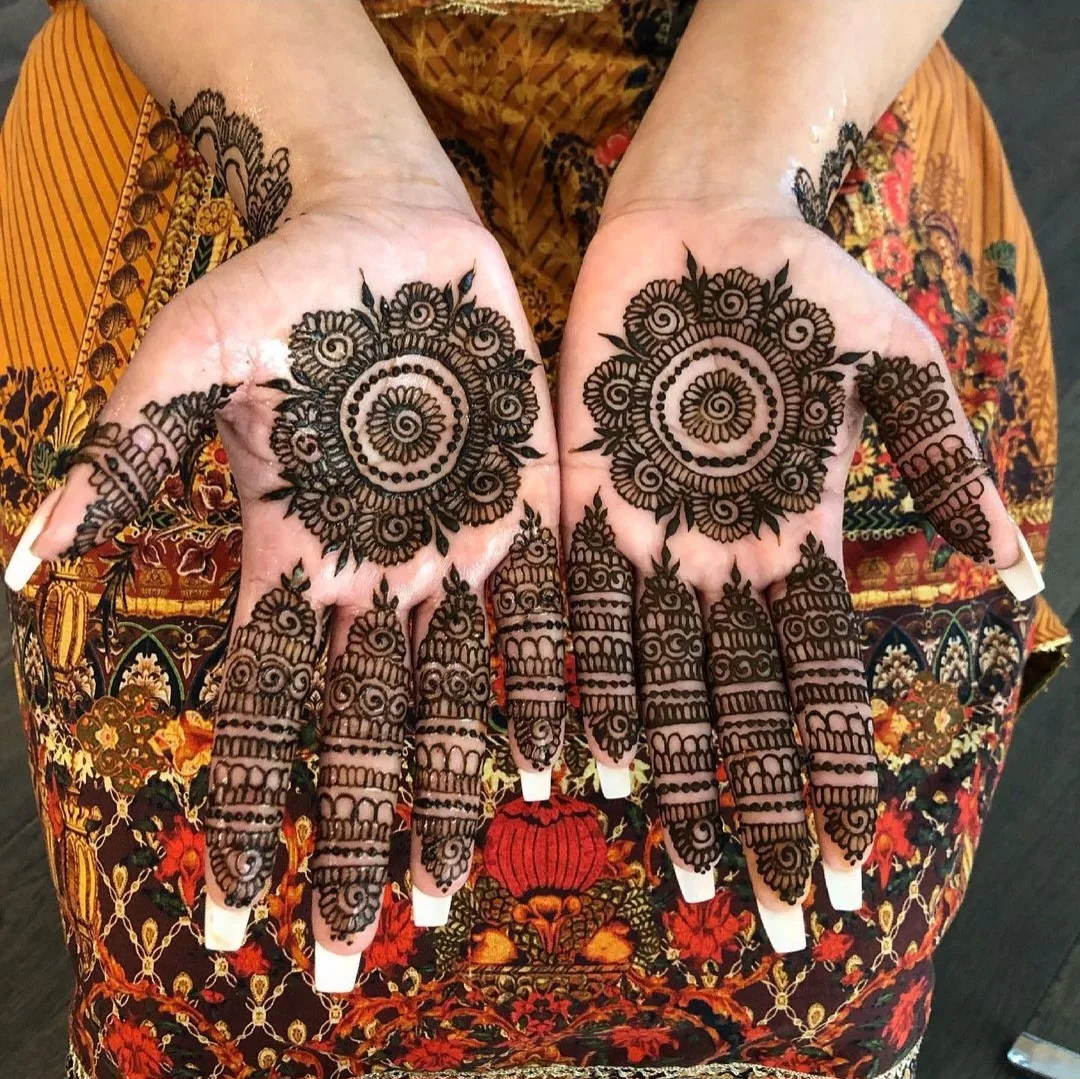
- Pakistani: dense jali and Mughal motifs, full coverage hands to elbows and feet to mid-calf
- Indian: a single focal motif — peacock, mandala, paisley — with more breathing room
- Arabic: bold floral vines with confident negative space, quicker to apply
- Modern fusion: hybrids that blend the above, which is where many of my Calgary brides land
Choose based on your outfit's intricacy, your cultural background if it matters to you, and how you want your hands to read in photographs.
Section 3: How do you book the right bridal mehndi artist in Calgary?
Choosing an artist is choosing experience and trustworthiness, because bridal work is unforgiving and the wrong product can be dangerous. The single most important thing to confirm is that the artist uses only natural henna — never PPD-based "black henna," which the FDA warns can cause serious skin reactions.
What to evaluate:
- Bridal experience specifically (not just party work)
- Portfolio showing real bridal designs across styles
- Reviews read carefully (Google, WeddingWire)
- Communication — are they responsive on your timeline?
- Ingredient transparency — do they use 100% natural henna?
- Travel policy — will they come to your venue?
- Trial — is one included?
A few red flags are worth taking seriously. Be cautious of anyone who can't tell you what's in their paste, who offers a suspiciously fast jet-black stain, who has no real bridal portfolio (party henna and bridal henna are genuinely different skills), or who is hard to reach during your planning window — responsiveness now usually predicts responsiveness on your wedding morning. For a booking this significant, trust matters as much as talent.
Section 4: What do bridal mehndi packages typically include?
Bridal packages are usually built around coverage rather than a single flat rate, because the amount of design drives the time and artistry involved. You'll generally choose between coverage tiers:
- Hands-only bridal — the most focused option
- Hands and feet bridal — a popular middle ground
- Full bridal — hands, arms, feet, and legs
Most packages fold in some combination of a trial, the application itself, and wedding-day touch-ups, plus travel and venue setup and aftercare guidance. (I keep specific pricing off the blog on purpose — coverage, design, and travel vary too much for a flat number to be honest. Share your date and vision for a real quote.)
It's just as useful to ask what isn't included. Travel beyond a certain distance, henna for your bridesmaids and family, a second application for a separate function, and extra forearm or leg coverage are often add-ons rather than standard inclusions. Clarifying these when you book keeps your budget predictable and your wedding week free of last-minute surprises.
Section 5: What happens at the bridal trial?
The trial is your insurance against wedding-day surprises, because it shows how your particular skin takes a stain before the stakes are high. I walk through the whole session in detail when you come in for one.
In short, a trial covers:
- Skin chemistry testing (how dark your stain develops)
- Design refinement on a small area
- Logistics and timing confirmation
- What to bring and how to prep
Section 6: What's the wedding-week timeline for bridal mehndi?
The final week runs on a countdown, because henna's colour is governed by timing and the days have to line up with your photos. Here's the rhythm I guide brides through:
- T-7 days: begin a gentle moisturising routine; stop exfoliating
- T-3 days: mehndi night application
- T-2 days: bridal application
- T-1 day: rest day, light aftercare, stay warm and dry
- Wedding day: touch-ups if needed
Section 7: What happens during your bridal application?
A bridal application is a long, calm session rather than a quick appointment, because dense work takes hours and the experience itself is part of the day. A typical full bridal session often unfolds something like this:
- 0:00 — setup and a final design briefing
- 0:30 — application begins, hands first
- 2:00 — a mid-session break for tea, a stretch, and a snack
- 3:30 — arms and feet
- 5:00 — final touches and paste sealing
- 5:30 — removal instructions and aftercare review
- Total: roughly 4–6 hours depending on coverage
Beyond the mechanics, a bridal session has a rhythm of its own — long, unhurried, and usually shared with a mother, sisters, or close friends who keep the bride company. Many brides tell me afterward that those quiet hours of being tended to, surrounded by the people they love, were a rare calm island in an otherwise frantic week. It's worth protecting that time rather than scheduling it back-to-back with ten other wedding errands.
[AROOJ TO VERIFY: confirm this session flow, the timings, and the break structure match how you actually run a bridal application — adjust the order/pacing to your real process before publishing.]
Section 8: How do you maximize stain depth for your wedding?
Getting the deepest possible colour is mostly about preparation and aftercare, because the stain develops on your skin over hours and days. The short version spans four windows:
- Pre-application: clean, lotion-free, warm skin
- During application: stay warm and still
- Post-application: leave the paste on 6–8+ hours, scrape (don't wash) it off
- First 24 hours: no water, no soap, no sanitiser; oil before any water exposure
Section 9: How long will your bridal henna last?
It's worth setting realistic expectations early, because "how long" depends heavily on where the design sits and how you care for it. As I explain in how long does henna last:
- Palms: 14–21 days with strong aftercare
- Backs of hands: 10–14 days
- Forearms and feet: 7–10 days
Plan your honeymoon knowing the colour fades gradually, and time your application so peak colour lands on the wedding day, not before it.
If you're heading somewhere warm afterward, remember that pools, the ocean, sunscreen, and frequent showering all speed up fading — so the henna you debut at the wedding will be a softer version of itself by the second week away. Most brides come to love watching it fade gently as a keepsake of the day; just don't expect wedding-day depth to survive a week of swimming.
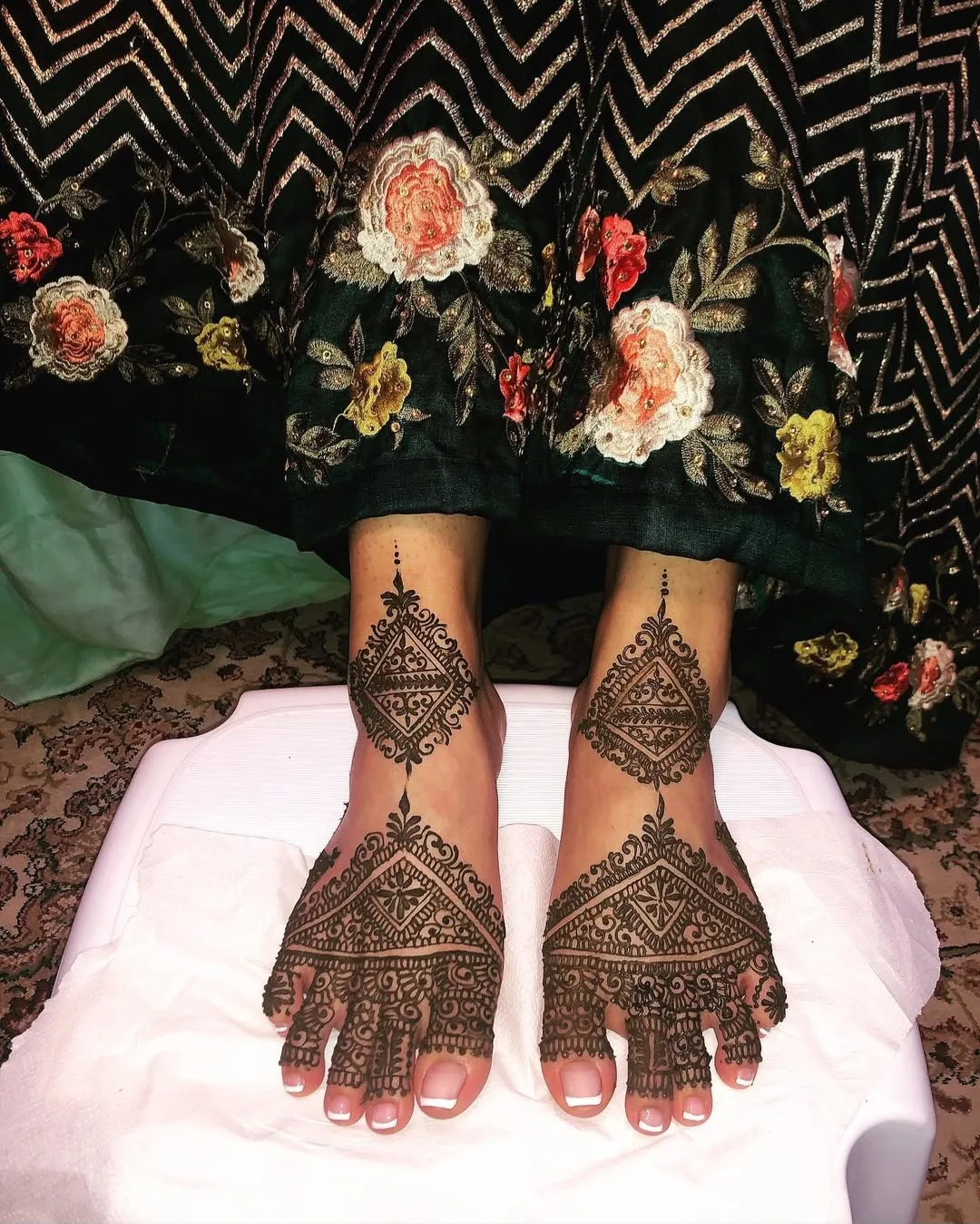
Section 10: How do you coordinate with your makeup artist and photographer?
Your henna doesn't exist in isolation on the wedding day — it shares your hands and your timeline with hair, makeup, and the camera. A few coordination points prevent most problems:
- Lotion compatibility: ask your MUA to avoid citrus-oil and acid-based products near the design
- Photographer timing: flag when you want henna close-ups so they're shot at peak colour
- Sealing for contrast: a light oil keeps the design photogenic without an oily shine
- Posing: plan a few hand-forward poses that feature the design
The single most common mishap I see is a makeup artist applying a rich, citrus-scented hand lotion right before photos, which can lift or blotch a stain that took hours to build. A two-minute heads-up to your MUA prevents it entirely. The same goes for your photographer: tell them in advance that you want hand-detail shots and they'll plan for them, rather than catching them as an afterthought between other moments. I cover this fully in my guide to coordinating bridal henna with your photographer.
Section 11: What about wedding-day touch-ups and "what if" scenarios?
Even with perfect planning, small things happen — and most are fixable, because an experienced artist builds contingencies into the day. Common scenarios:
- Stain looks light in the morning? A touch-up and the right lighting help
- Water hit the design? Localised touch-ups can rescue it
- Something smudged? Most smudges can be reworked
- A detail missing? Touch-ups fill the gaps before the ceremony
Section 12: How do you handle aftercare during your wedding week?
Wedding-week aftercare is ordinary aftercare with the volume turned up, because the stain has to peak on a specific day amid a lot of activity. For brides, the key points are protecting the first 24 hours completely, coordinating moisturisers with your MUA, and planning around showering for the ceremony.
A few bridal-specific scenarios come up often. If you need to shower before the ceremony, do it quickly with lukewarm water and oil your hands first, and never scrub the design. If hair and makeup run long, protect your hands from accidental product transfer with light cotton gloves between stations. And if your wedding spans several functions, ask your artist about a touch-up between events, so the design looks fresh in every set of photos rather than fading visibly across the celebrations.
Section 13: What Calgary-specific things should you consider?
Marrying in Calgary adds a few local variables worth planning around, because both the climate and the geography affect the day. Our community makes it vibrant — Statistics Canada counted more than 2.5 million South Asian Canadians as of 2021, with a sizeable share in the Calgary region.
- Weather: cold, dry months can shorten a stain, so lean harder on aftercare in winter
- Venue and travel: factor in time and setup, especially out to Airdrie, Cochrane, or Chestermere
- Vendor coordination: photographer, MUA, and decorator all share the timeline
- Logistics: parking and travel across NE Calgary on busy wedding weekends
Winter weddings deserve a special note. Calgary's cold, dry months pull moisture from the skin and can shorten a stain, so a December or January bride should lean harder on moisturising in the days before, and keep her hands warm right through the application and the first night. It's nothing dramatic — just a little extra attention the climate quietly asks for, and the payoff is colour that still photographs beautifully in the depths of a prairie winter.
Section 14: What are the most common bridal mehndi mistakes to avoid?
Most bridal-henna regrets come from a short list of avoidable mistakes, because they trace back to timing and preparation rather than artistry. Steer clear of these:
- Booking too late (within three months)
- Skipping the trial
- Neglecting aftercare
- Using "black henna"
- Doing the mehndi night too early
- Not briefing your MUA
- Hitting the gym while the stain sets
- Skipping touch-ups when they're needed
Section 15: What questions should you ask before booking?
The booking conversation is where you confirm you're hiring genuine bridal expertise, because the right questions surface everything that matters. Bring this checklist:
- How many years have you done bridal specifically?
- Which styles do you specialize in?
- Do you mix your own henna paste or use store-bought?
- Is your henna 100% natural? Do you ever use PPD?
- What's included in your bridal package?
- Do you travel, and what's the fee?
- Will you do my mehndi night separately?
- What happens if I'm running late on application day?
- Do you offer wedding-day touch-ups?
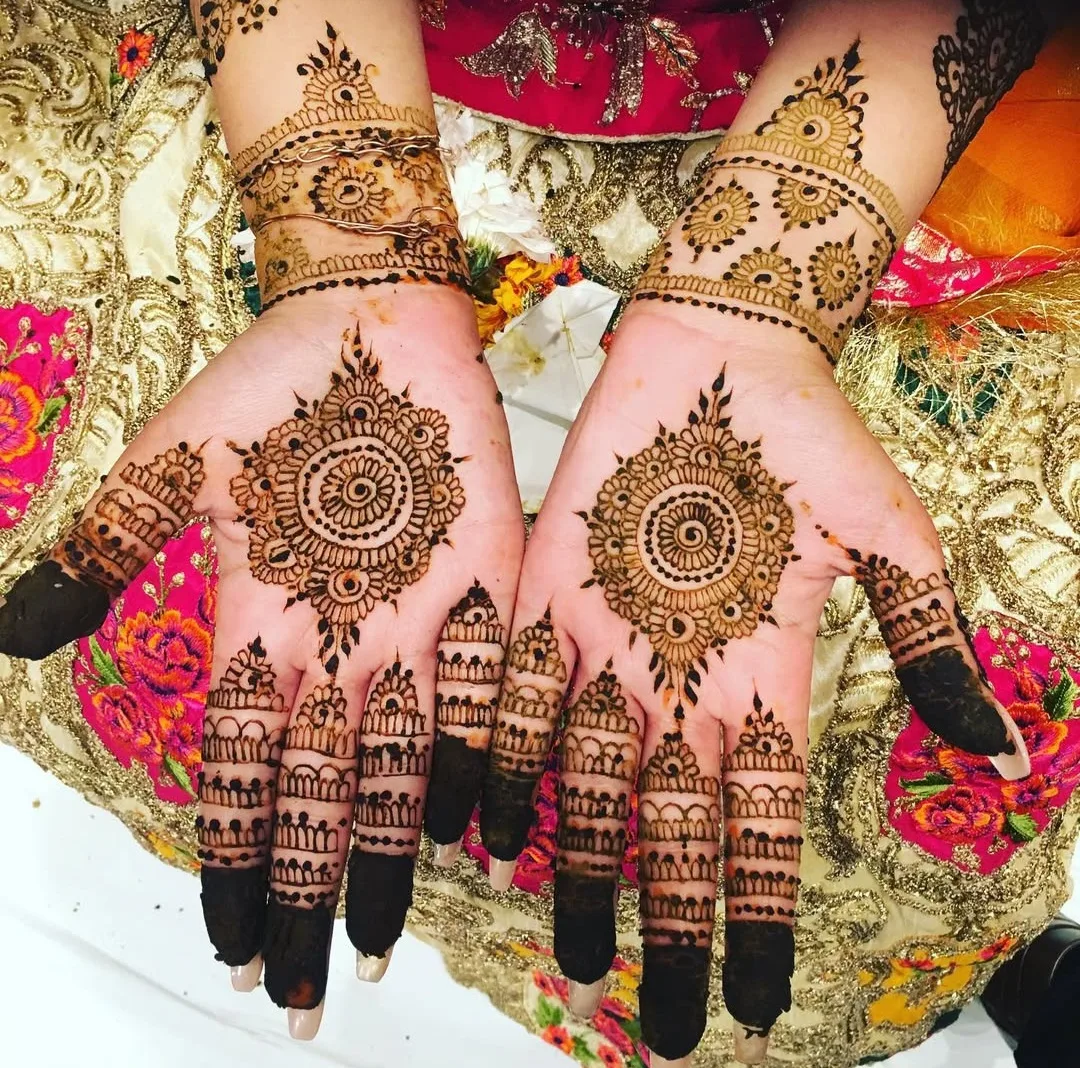
Book with Henna by Arooj
Planning your Calgary wedding? Explore my bridal henna options and inquire about your wedding date — bridal slots for summer and Eid season fill quickly, so the earlier we connect, the better.
Frequently asked questions
How much does bridal mehndi cost in Calgary?
Bridal mehndi pricing in Calgary depends on coverage (hands only vs. hands, arms, and feet), the intricacy of the design, the length of the session, whether a trial is included, and travel to your venue. Because every bride's design and timeline are different, the honest answer is to share your date and vision and ask for a quote rather than rely on a flat number.
How early should I book my bridal mehndi artist?
Book 4–8 weeks before the wedding — aim for the 8-week end for summer Saturdays, Eid-season weddings, or if you want a trial first. Experienced Calgary artists book up fastest in those windows, so the earlier you reach out, the more likely you are to get your preferred date.
What's the difference between Pakistani and Indian bridal mehndi?
Pakistani bridal mehndi favours dense, all-over jali (mesh) work and Mughal floral motifs with full coverage. Indian bridal mehndi usually builds around a single focal motif — a peacock, mandala, or paisley — with more negative space. Both are intricate; they simply organise the design differently.
How long will my bridal mehndi last?
With good aftercare, bridal henna on the palms can stay rich for 14–21 days, and on the backs of the hands 10–14 days. Feet and forearms hold a little less. Applying two days before the wedding positions the colour at its peak for your photos.
Do I need a trial session before my wedding?
It's strongly recommended, especially for first-time henna brides. A trial 4–8 weeks out tests how your skin takes a stain, finalizes your design, and confirms timing — removing most of the unknowns before the wedding day.
What should I do if I'm allergic to henna?
True allergies to pure, natural henna are rare; most reactions people attribute to 'henna' are actually reactions to PPD in 'black henna,' which is a chemical. If you have sensitive skin, ask for a patch test 24–48 hours before your bridal application, and only ever work with an artist who uses 100% natural henna.
Can my bridesmaids and family get henna too?
Yes — group henna for bridesmaids, sisters, and mothers is common, usually with lighter, faster designs than the bride's. It's best arranged in advance so there's enough time set aside for everyone, often as part of the mehndi night.
Does a bridal mehndi artist travel to wedding venues?
Many do, across Calgary and surrounding cities like Airdrie, Cochrane, Chestermere, Okotoks, and beyond. Confirm travel and any associated fee when you book, along with the setup the artist needs at the venue (a table, chairs, and good lighting).
What's the ideal timing for my mehndi night before the wedding?
For peak colour in your wedding photos, hold the mehndi night two to three days before the shaadi. Applying earlier means the stain will have faded by the wedding day, since henna peaks around 48 hours and lightens through weeks two and three.
How do I coordinate bridal mehndi with my photographer?
Align three things: application timing (about two days before for peak colour), photographer access during application for behind-the-scenes shots, and wedding-day poses that feature your hands. A short conversation between your artist and photographer beforehand prevents most issues.
Book your Calgary henna session
Bridal mehndi, party & event henna, and private appointments by Arooj — 100% natural henna, custom freehand designs.
View the service →Related articles
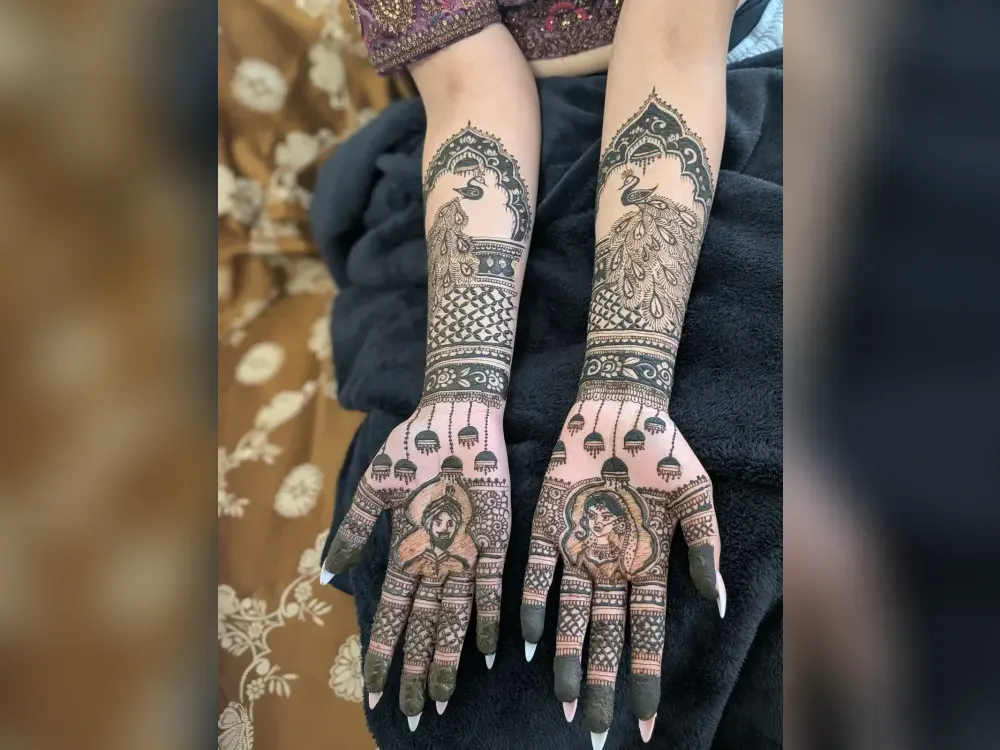
The Calgary Mehndi Night Planning Checklist (From a Bridal Henna Artist)
Plan a Calgary mehndi night: book 4–8 weeks ahead, apply the bride's henna 2–3 days before the shaadi, and budget 4–6 hours of application. A Calgary bridal henna artist's full checklist.
Read article →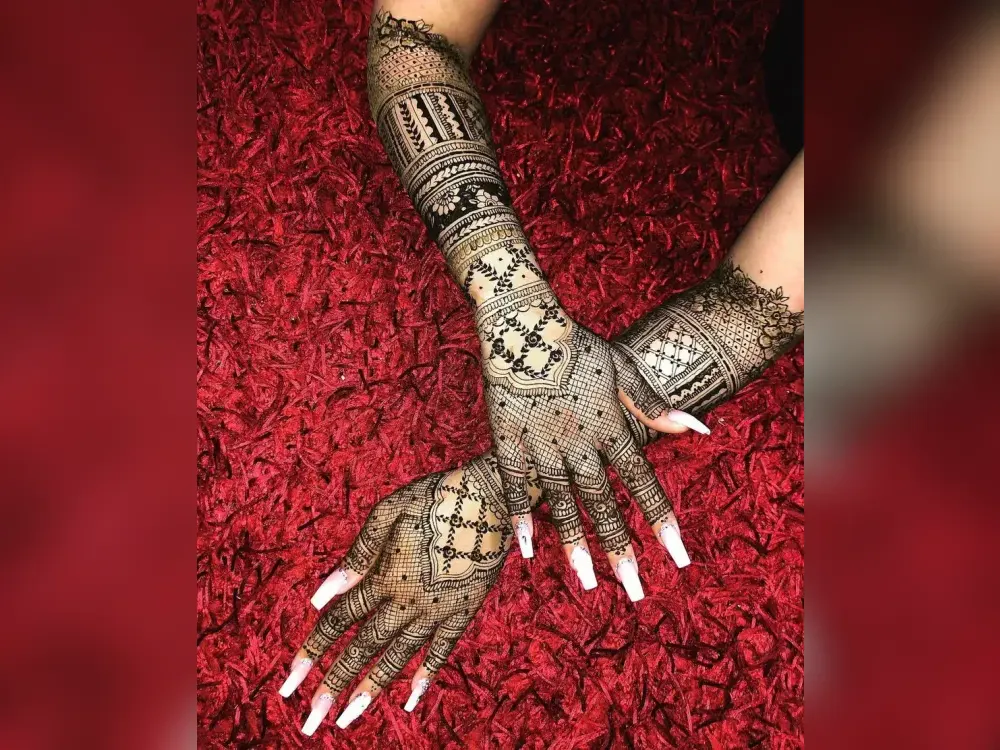
How to Coordinate Your Bridal Henna With Your Wedding Photographer
Coordinate bridal henna and photography by aligning three things: application timing for peak colour, photographer access during application, and hand-forward poses. A Calgary artist's guide.
Read article →
What to Expect at Your Bridal Mehndi Trial
A bridal mehndi trial is a 1–2 hour session 4–8 weeks before your wedding to test stain depth, finalize design, and confirm timing. A Calgary artist on what happens and how to prepare.
Read article →