Pakistani vs Indian vs Arabic Bridal Mehndi: A Style Guide
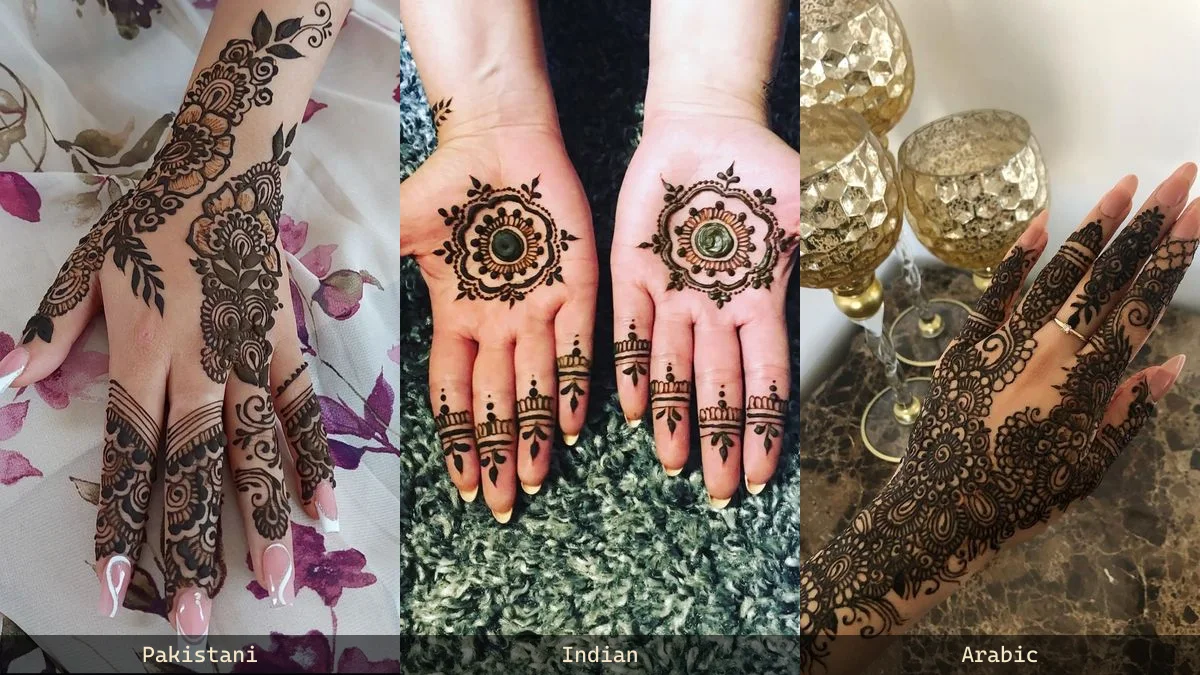
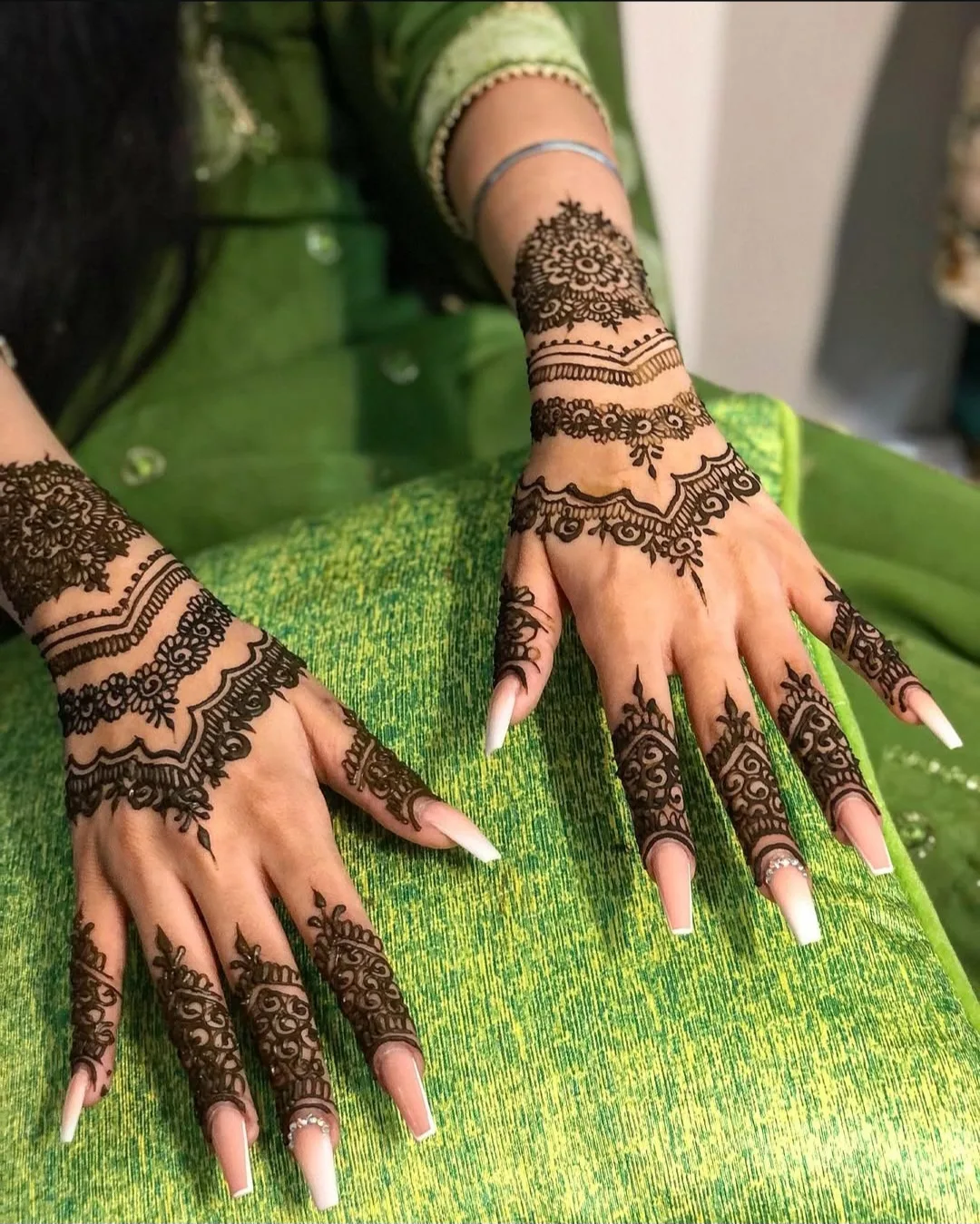
Pakistani bridal mehndi uses dense jali (mesh) work and intricate Mughal motifs with full coverage. Indian bridal mehndi centres on a single focal design — a peacock, paisley, or mandala — surrounded by negative space. Arabic mehndi flows in bold floral vines with confident open space throughout. All three share henna's ancient roots, but after 13+ years designing for Calgary brides, I can tell you they've each evolved a distinct personality.
Choosing between them is one of the most enjoyable conversations I have with a bride. Let me show you what defines each style, how they compare, and how to pick the one that's right for your hands and your wedding.
The three styles at a glance
Before the details, it helps to see the three side by side, because the differences are easier to feel than to describe. Henna itself is a single tradition with deep history — UNESCO inscribed henna rituals on its list of intangible cultural heritage in 2024 — but regional styles diverged over centuries into the three families brides ask for today.
| Feature | Pakistani | Indian | Arabic |
|---|---|---|---|
| Design density | Very high (jali fills) | Medium–high | Medium, open space |
| Central motif | Mughal floral | Peacock / mandala / paisley | Floral vines |
| Coverage area | Hands + arms + feet | Hands + sometimes feet | Hands or specific zones |
| Application time | 4–6 hours bridal | 3–5 hours bridal | 1–3 hours |
| Best for | Detailed, traditional brides | Storytelling focal designs | Modern brides, parties |
What defines Pakistani bridal mehndi?
Pakistani bridal mehndi is the most maximal of the three, defined by its dense jali backgrounds and Mughal-era detail that leave almost no bare skin. This love of intricate, all-over pattern traces directly to the courts of the Mughal Empire, which the Natural History Museum notes ruled the subcontinent from roughly 1526 to 1857 and elevated henna into a refined art.
What you'll recognise in Pakistani style:
- Jali (mesh/lattice) backgrounds filling the space
- Mughal floral motifs and fine paisleys
- Dense coverage with minimal negative space
- Often the groom's name or initials hidden in the design
- Full bridal coverage: both hands to the elbow, feet to mid-calf
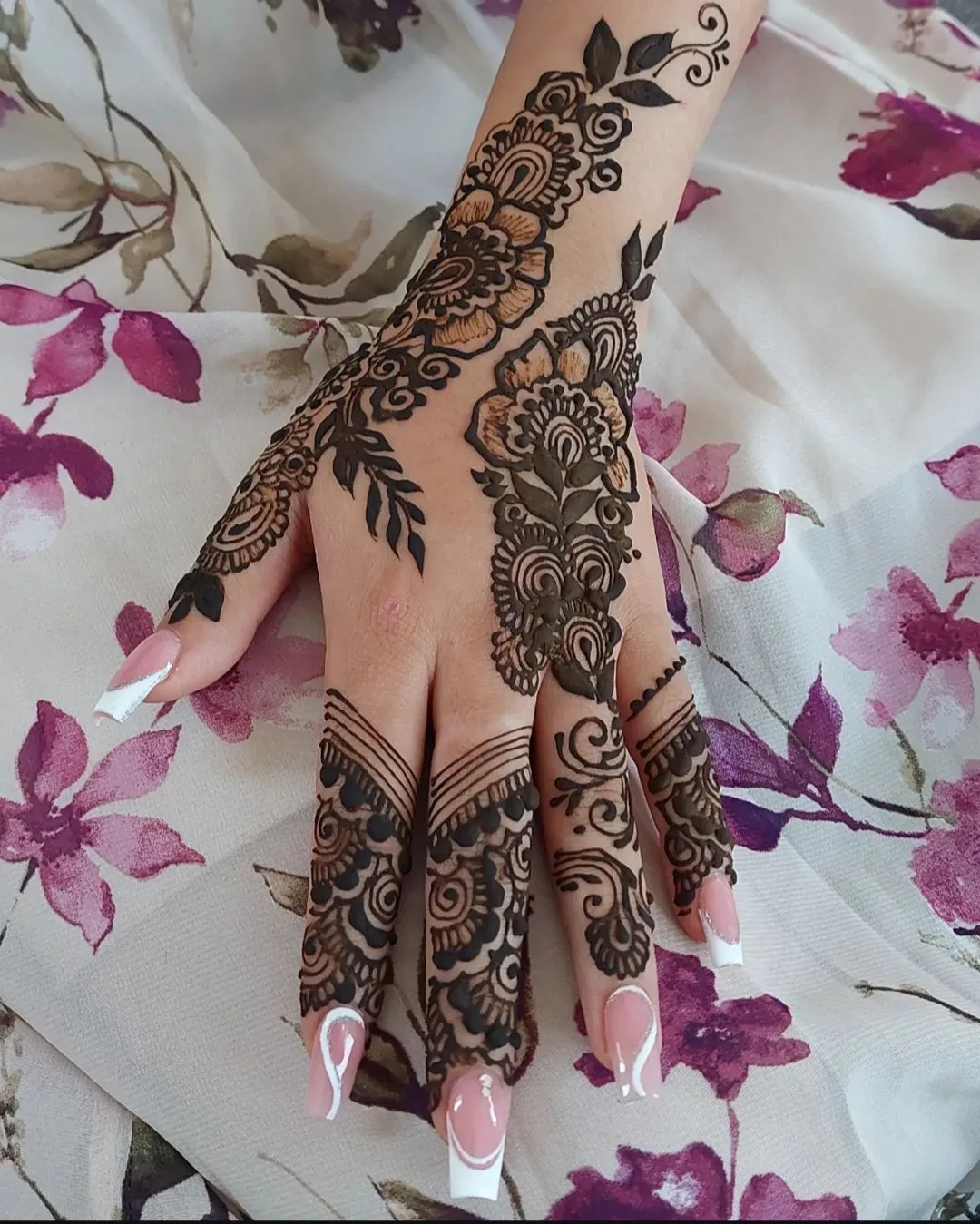
As a Pakistani artist myself, this is the tradition closest to my heart — and the one many of my Calgary brides come to me specifically for.
What defines Indian bridal mehndi?
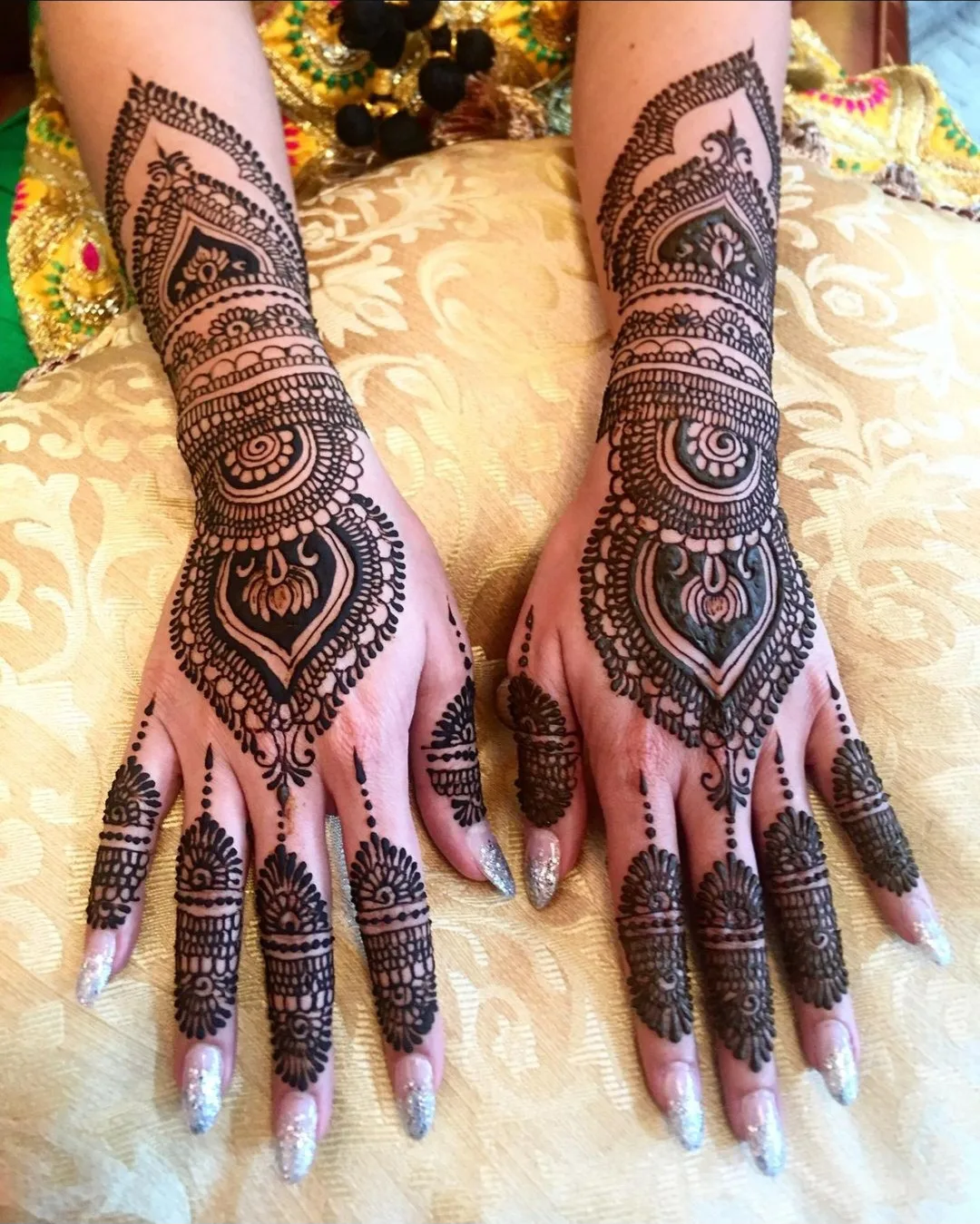
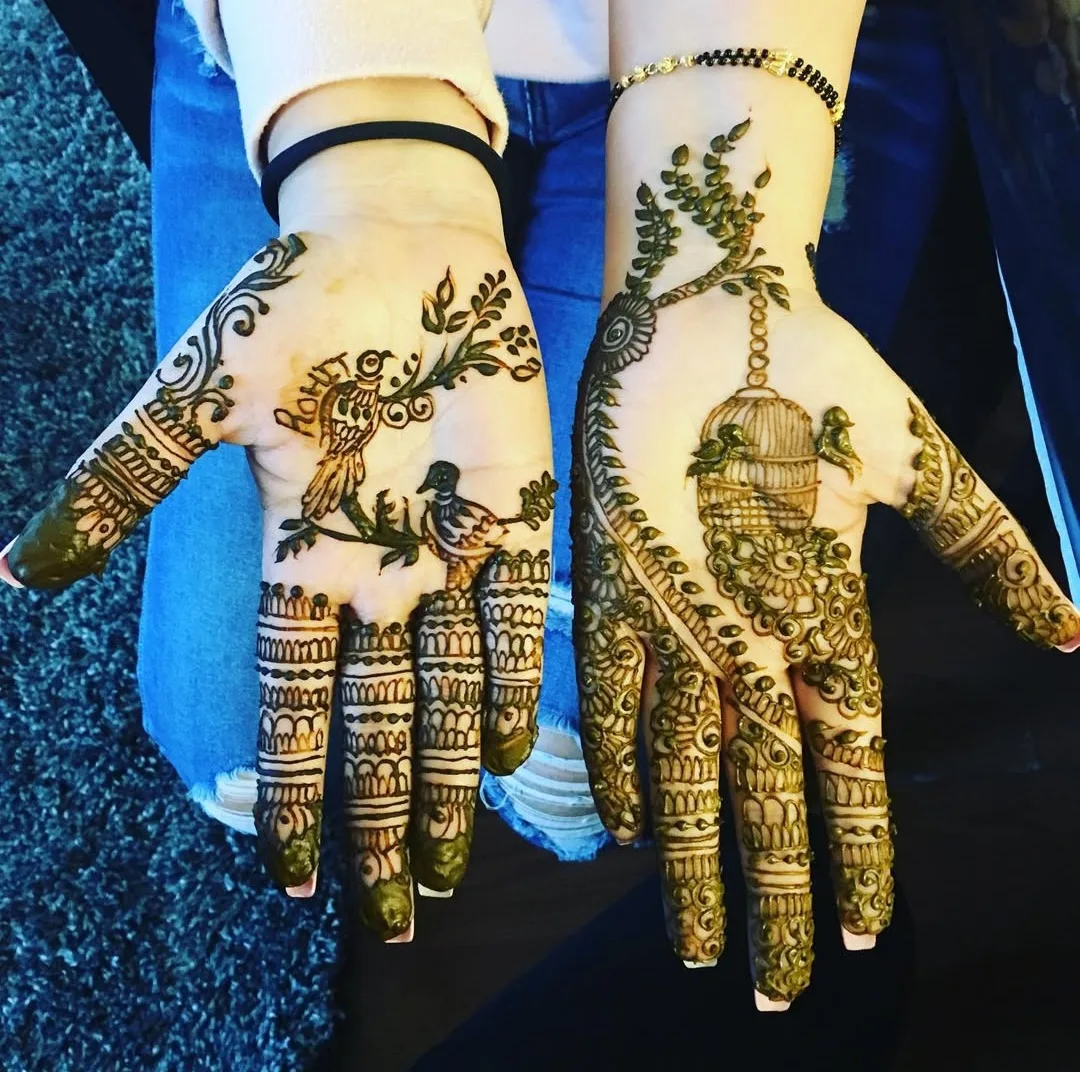
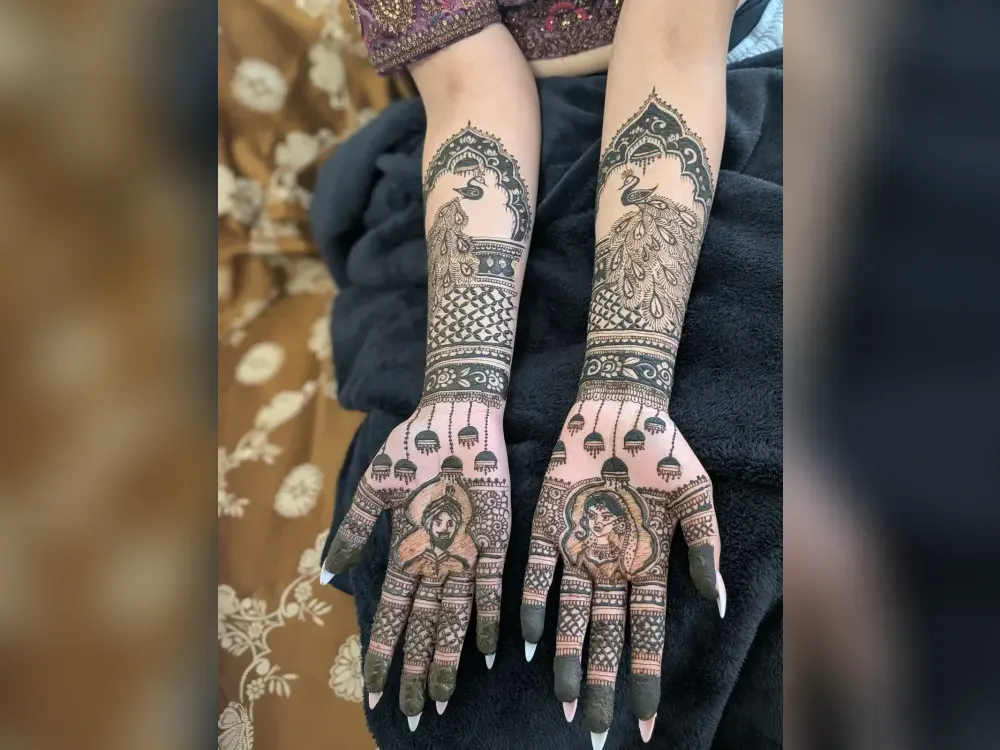
Indian bridal mehndi is built around storytelling, organising the whole design around one strong focal motif rather than uniform fill. The result reads almost like a small narrative on the hands, with a peacock or mandala anchoring the composition and finer work radiating outward.
What you'll recognise in Indian style:
- A single focal motif as the "story" of the design
- Peacocks, mandalas, paisleys, and lotus blooms
- Sometimes the bride and groom's faces woven into the pattern
- More breathing room between elements than Pakistani work
- Regional variation — North Indian designs denser than South Indian
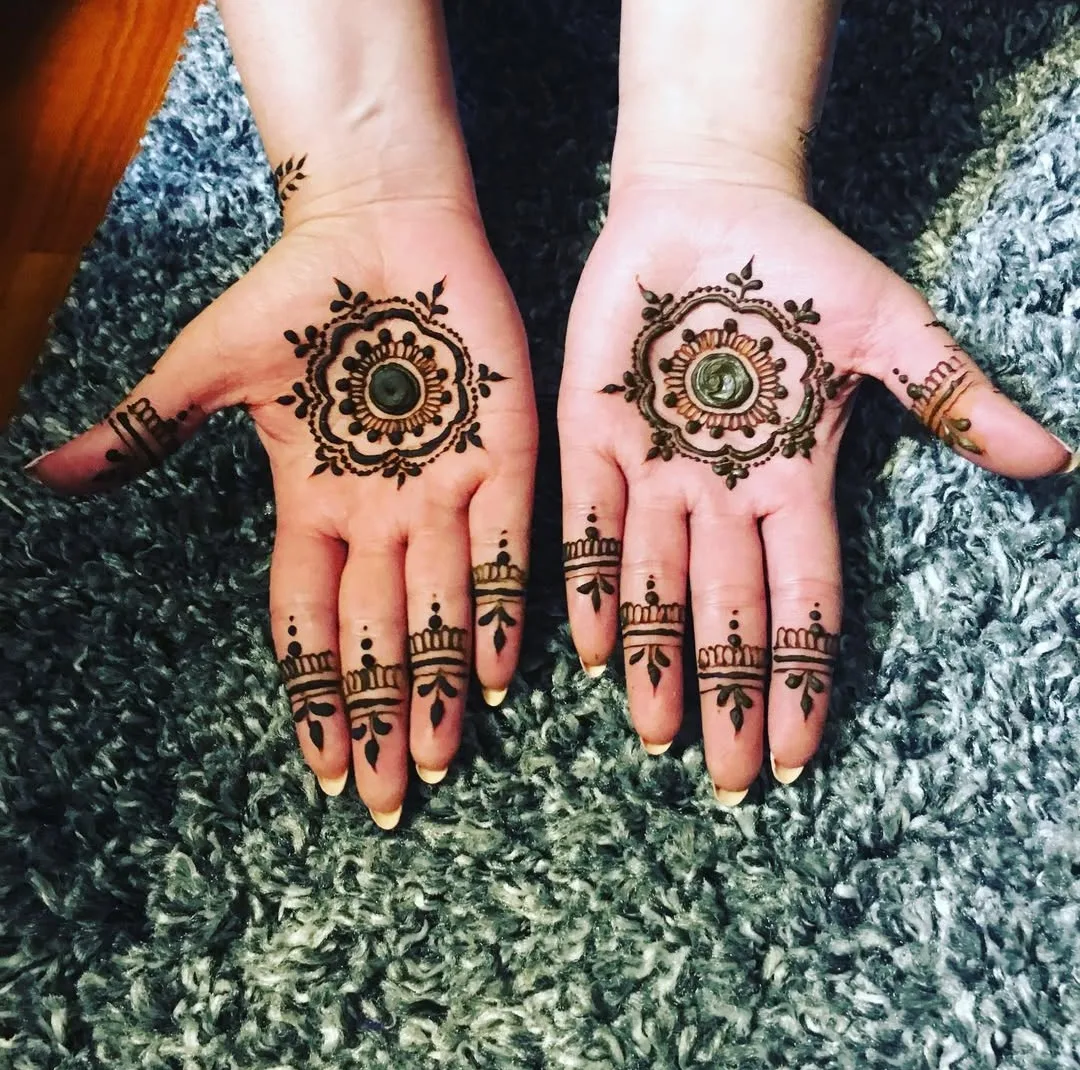
These focal designs are wonderful for close-up photography, because the eye lands immediately on the centrepiece.
What defines Arabic bridal mehndi?
Arabic mehndi is the most open and flowing of the three, using bold floral vines and confident negative space rather than dense fill. It's quicker to apply and has a modern, breezy elegance that suits brides who want impact without full coverage.
What you'll recognise in Arabic style:
- Bold floral vines with leaves and blossoms
- Deliberate, confident negative space
- Faster application than Pakistani or Indian bridal work
- A modern, less-traditional feel
- Popular for parties, semi-bridal events, and fusion weddings
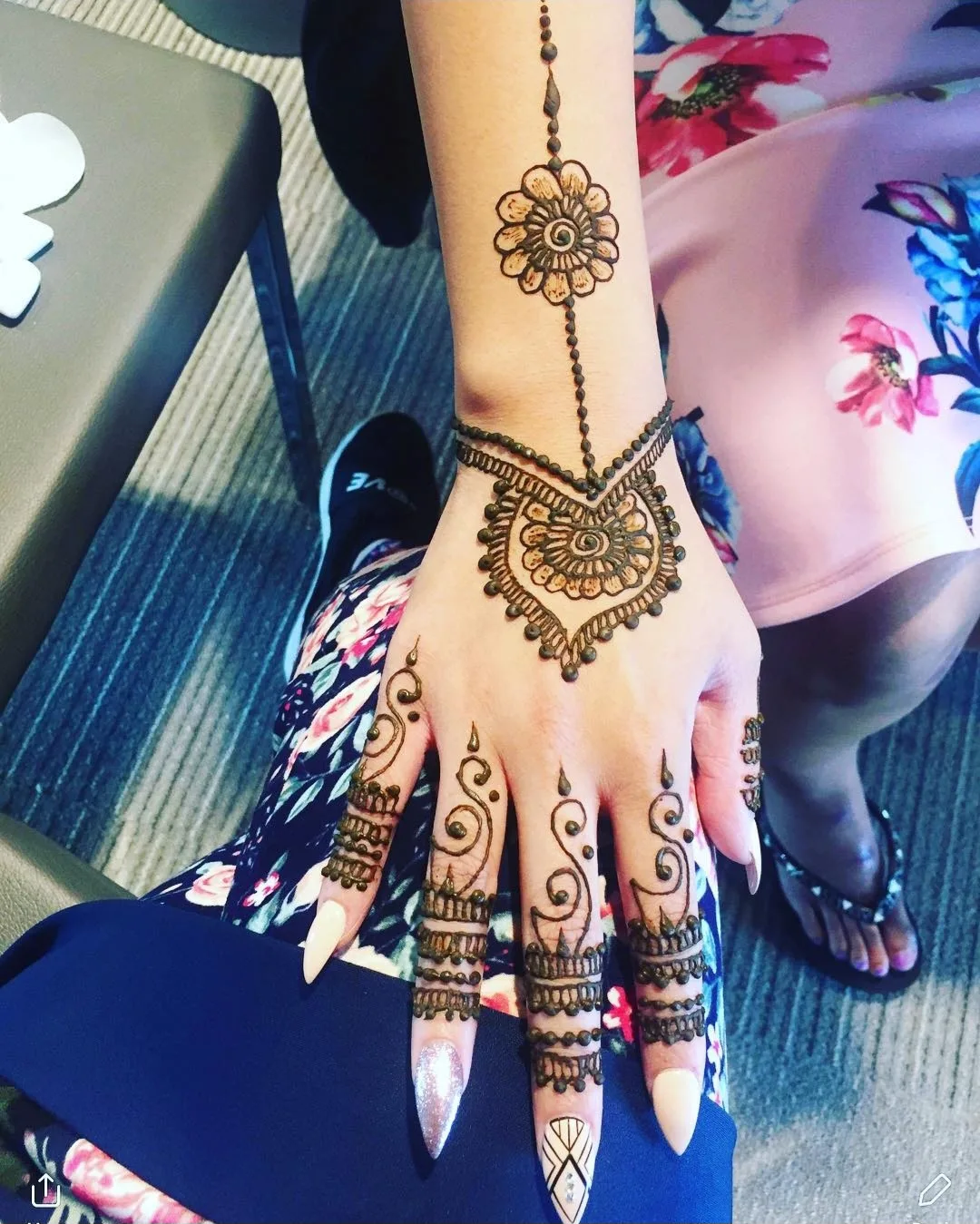
Because Arabic designs photograph with such clean contrast, I often suggest them to brides who love a striking-but-airy look — or for the lighter events around the main wedding.
What about modern fusion bridal mehndi?
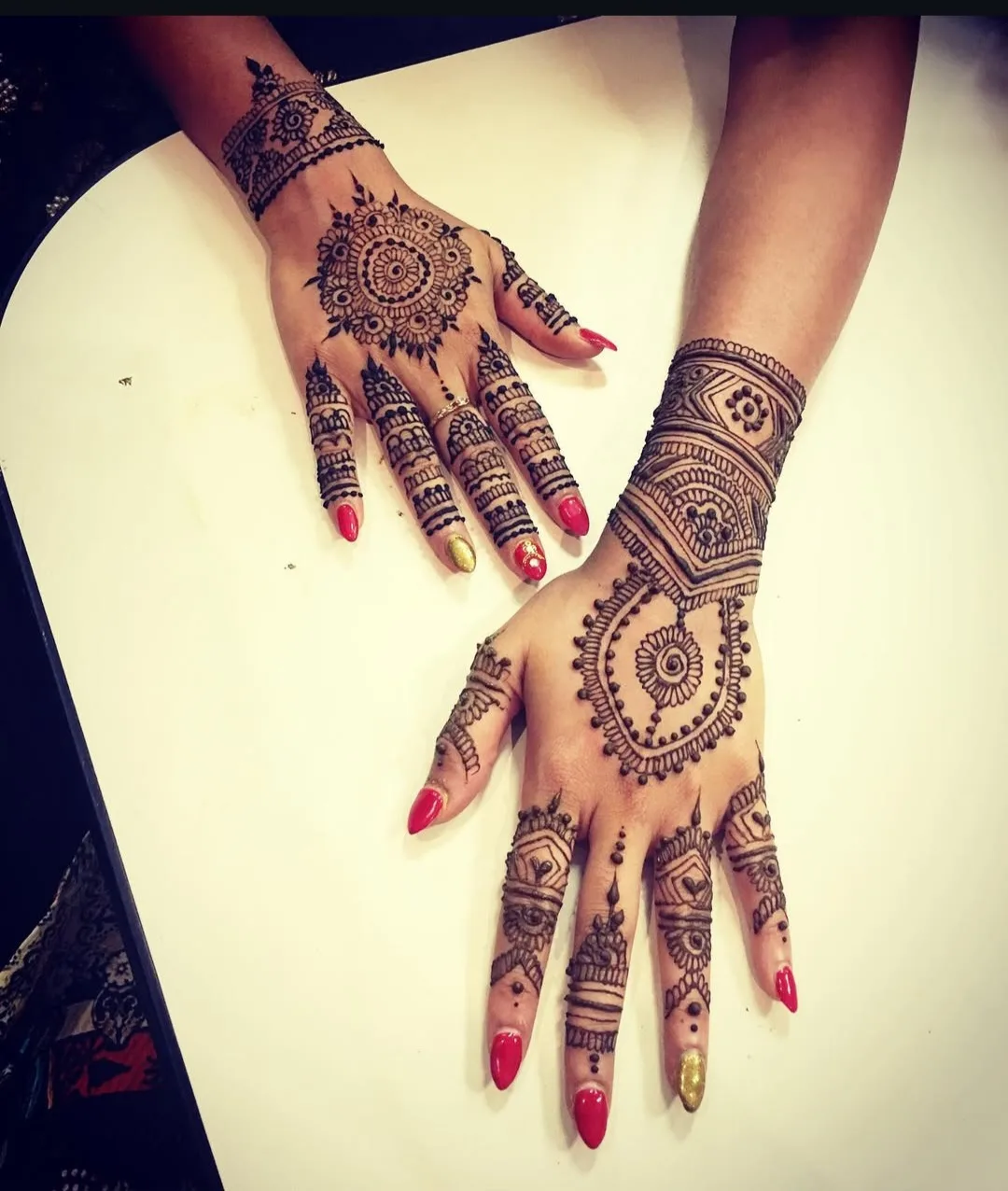
Fusion is where most of my Calgary brides actually land, because blending styles lets them keep the parts of each tradition they love. There's nothing rigid about these categories — they're a vocabulary, and brides increasingly mix the dialects.
Combinations I design often:
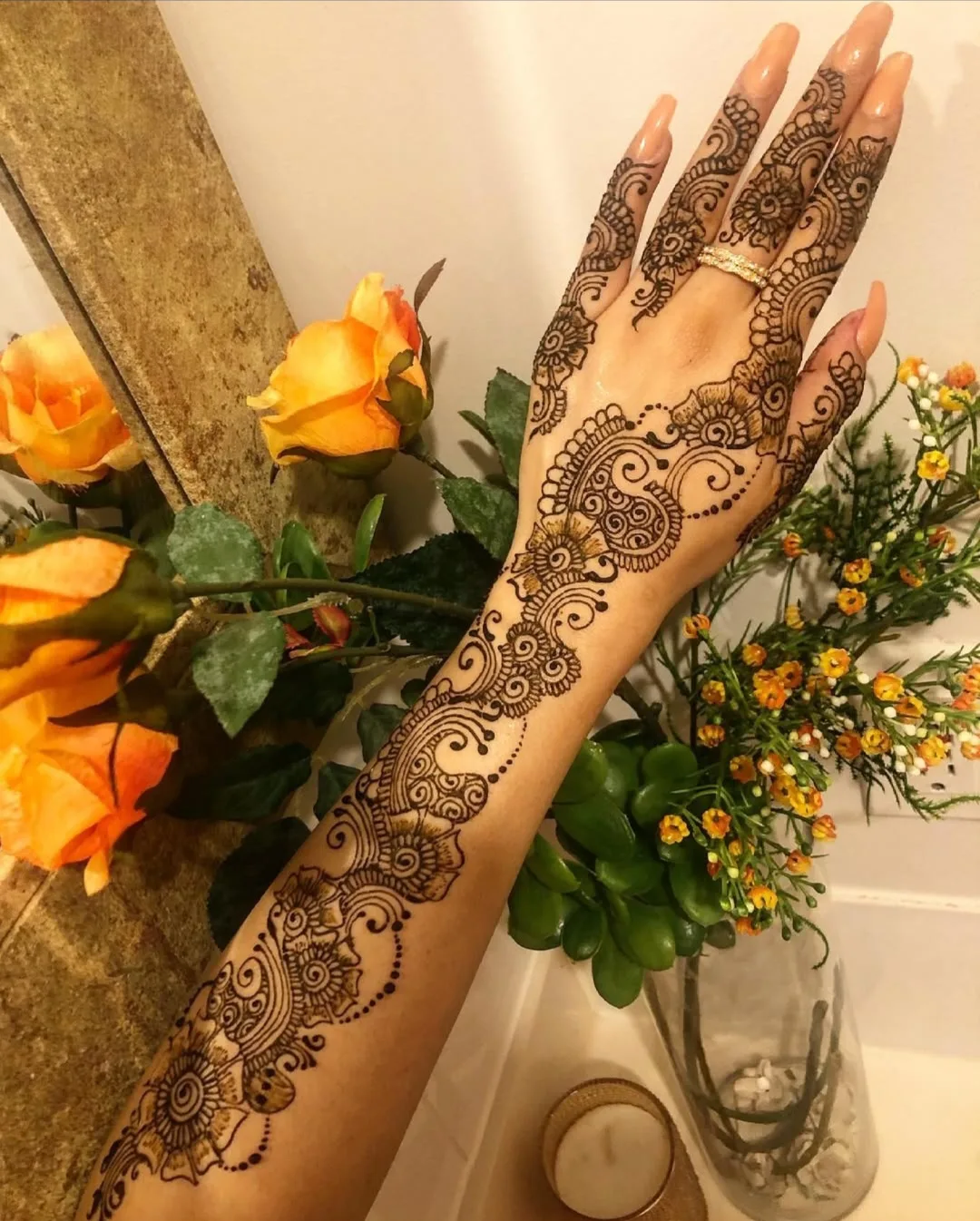
- Pakistani jali on the hands flowing into Arabic vines up the forearms
- An Indian focal mandala on the palm with Arabic vines extending up the arm
- Mughal florals softened with modern minimalist negative space
How do you choose the right style for your wedding?
The best style for you is the one that suits your hands, your outfit, and your photos — not a rule about your background. I walk every bride through a simple decision framework so the choice feels clear rather than overwhelming.
Consider:
- Your cultural background, as a meaningful default if it matters to you
- Your outfit's intricacy — a heavily embellished lehenga often pairs with heavier henna
- Photography — focal motifs and high-contrast designs read well in close-ups
- Matching designs if you and your partner want coordinated elements
- Session length — are you happy to sit for six hours, or do you want something quicker?
Timing then matters as much as style: whichever look you choose, applying it two days before the shaadi puts it at peak colour for your photos, which I cover in when to apply your bridal henna.
Can you mix different styles on hands versus feet?
Yes, and it's a popular choice — mixing styles by body zone lets you balance detail with application time. Many Calgary brides want showpiece hands but something simpler on the feet, and splitting the styles makes that easy.
Combinations that work beautifully:
- Pakistani jali on the hands, lighter Arabic florals on the feet
- An Indian mandala on the palms with Mughal motifs up the forearms
- Different intensities by event — fuller for the shaadi, lighter for the mehndi night
Book with Henna by Arooj
Working on your bridal mehndi vision? Send me your inspiration and let's design something custom for your Calgary wedding — explore bridal henna options to start. When you're ready to go deeper, my complete Calgary bridal mehndi guide ties the whole process together.
Frequently asked questions
What style of bridal mehndi is most popular in Calgary?
All three are popular here, reflecting Calgary's diverse Pakistani, Indian, and Arab communities. Pakistani-style full-coverage bridal work and modern Pakistani-Arabic fusion designs are what I'm asked for most often, but Indian focal-motif designs and lighter Arabic styles are close behind.
Can I combine Pakistani and Arabic styles?
Absolutely — fusion is one of the most requested looks among my Calgary brides. A common combination is dense Pakistani jali on the hands flowing into bolder, more open Arabic vines up the forearms, which gives you intricate palms for photos and a lighter, modern feel on the arms.
Which bridal mehndi style takes the longest?
Pakistani bridal mehndi is typically the longest, often four to six hours, because of its dense jali fills and full coverage from hands to elbows and feet to mid-calf. Indian bridal work runs three to five hours, while Arabic designs are the quickest at roughly one to three hours.
Do I have to choose a style that matches my cultural background?
Not at all. Many brides honour their heritage, and that's a beautiful default — but mehndi is a shared art form, and you're welcome to choose the style that suits your outfit, your taste, and your wedding's look. I'll happily share my thoughts on what tends to flatter different hands and photograph well.
What's the difference between Pakistani and Indian mehndi?
Pakistani mehndi tends toward dense, all-over jali (mesh) work and Mughal floral motifs with minimal empty space. Indian mehndi usually builds around a single focal motif — a peacock, mandala, or paisley — with more breathing room around it. Both are intricate; they simply organise the design differently.
Which bridal mehndi style looks best in wedding photos?
Each photographs beautifully in its own way. Focal motifs like Indian mandalas read clearly in close-ups, dense Pakistani work reads as rich texture, and bold Arabic florals photograph cleanly with high contrast. The bigger factor for photos is timing — applying two days before so the stain is at peak colour.
Book your Calgary henna session
Bridal mehndi, party & event henna, and private appointments by Arooj — 100% natural henna, custom freehand designs.
View the service →Related articles
The Calgary Mehndi Night Planning Checklist (From a Bridal Henna Artist)
Plan a Calgary mehndi night: book 4–8 weeks ahead, apply the bride's henna 2–3 days before the shaadi, and budget 4–6 hours of application. A Calgary bridal henna artist's full checklist.
Read article →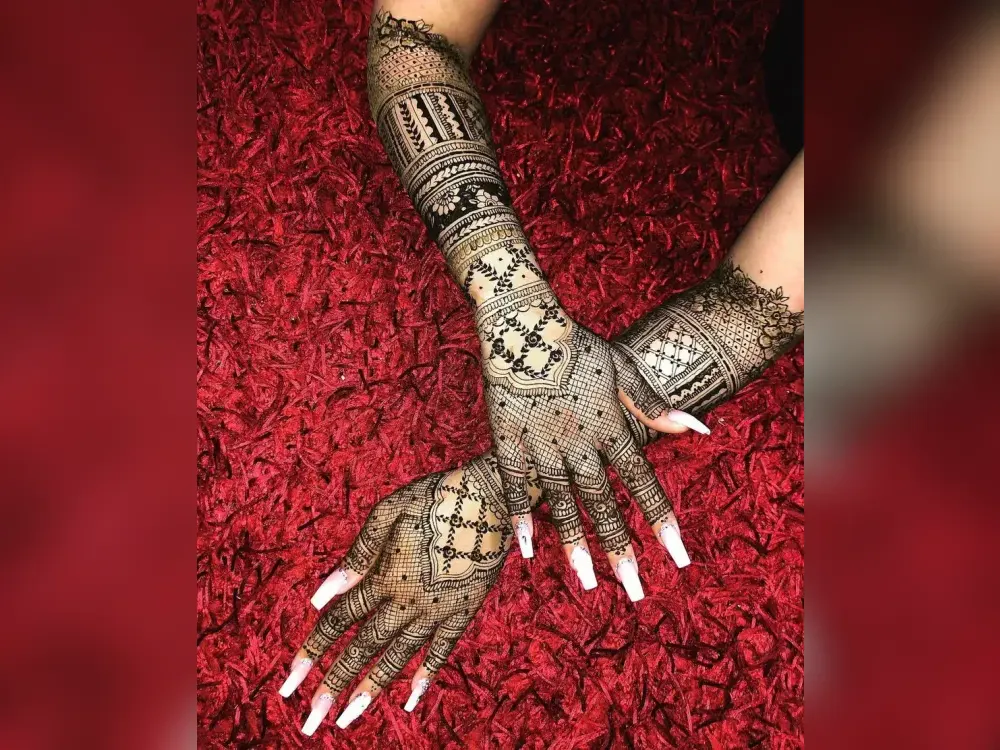
How to Coordinate Your Bridal Henna With Your Wedding Photographer
Coordinate bridal henna and photography by aligning three things: application timing for peak colour, photographer access during application, and hand-forward poses. A Calgary artist's guide.
Read article →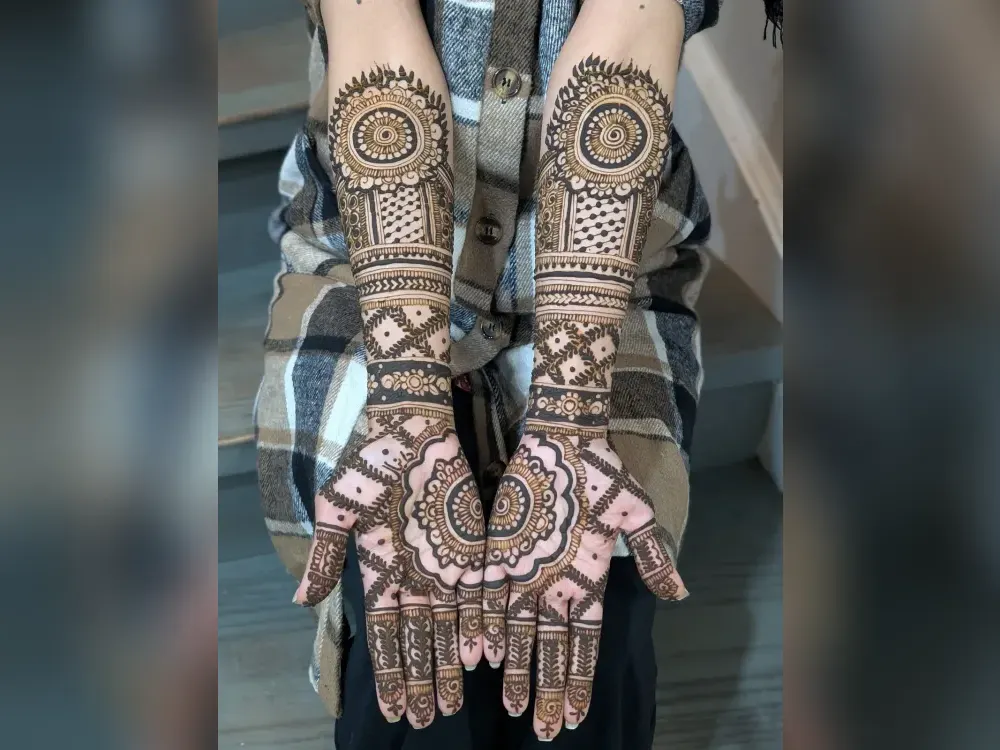
The Complete Calgary Bridal Mehndi Guide
Everything a Calgary bride needs for her mehndi — timeline, styles, booking, the trial, wedding-week aftercare, and photographer coordination. The definitive guide from a Calgary bridal henna artist.
Read article →